



ConocoPhillips Stock (COP) Moved Down by 3.43% on May 26: What Investors Need To Know
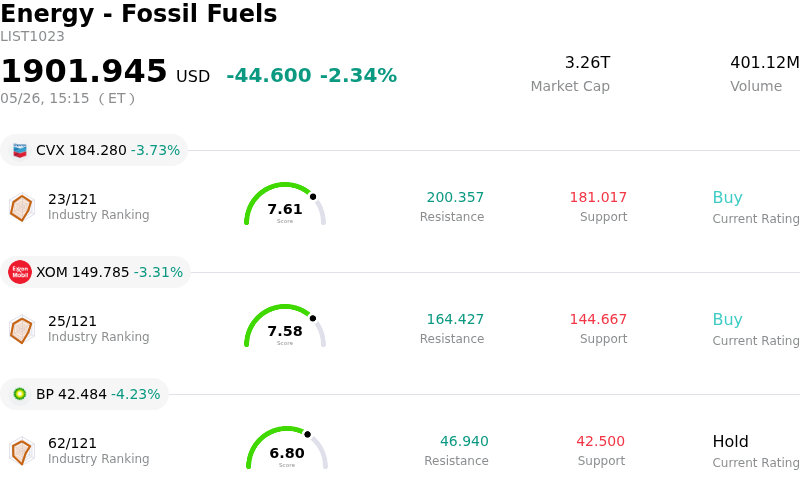
ConocoPhillips (COP) moved down by 3.43%. The Energy - Fossil Fuels sector is down by 2.34%. The company underperformed the industry. Top 3 stocks by turnover in the sector: Chevron Corp (CVX) down 3.73%; Exxon Mobil Corp (XOM) down 3.31%; BP PLC (BP) down 4.23%.
What is driving ConocoPhillips (COP)’s stock price down today?
ConocoPhillips (COP) experienced a downturn in its share price today, influenced primarily by revised company guidance despite a positive earnings report. The company announced quarterly earnings that surpassed profit expectations. However, this positive financial performance was overshadowed by updated guidance that lowered its full-year 2026 production outlook to a range of 2.295 to 2.325 million barrels of oil equivalent per day. This reduction in production guidance appears to have limited upside potential and contributed to the stock's decline.
Adding to the pressure, the stock is currently trading below its 20-day and 50-day moving averages, which indicates prevailing short-term and medium-term selling pressure. Momentum indicators also suggest continued weakness in the stock's performance.
Broader market dynamics, particularly in crude oil prices, continue to introduce volatility into the energy sector. Global oil prices were navigating a complex environment, influenced by geopolitical tensions in the Middle East. While Brent crude futures saw some recovery, pushing back toward the $100-a-barrel mark due to renewed U.S. strikes in Iran and ongoing uncertainty in negotiations, the overall market for oil remains susceptible to rapid shifts based on news related to conflict or potential peace deals. For instance, U.S. crude oil fell earlier, reflecting a response to hopes for a deal, but then saw some upward movement. This fluctuating commodity price environment, combined with the company's specific guidance revision, created an unstable backdrop for the stock.
Furthermore, some institutional investors have adjusted their positions. Legal & General Group Plc reduced its stake in ConocoPhillips in the fourth quarter. Similarly, Parkside Investments LLC also decreased its holdings during the fourth quarter, and insider selling was noted. While these transactions occurred in prior periods, they indicate a broader trend of selling pressure that could contribute to current market sentiment.
Technical Analysis of ConocoPhillips (COP)
Technically, ConocoPhillips (COP) shows a MACD (12,26,9) value of [-0.50], indicating a neutral signal. The RSI at 48.38 suggests neutral condition and the Williams %R at -44.75 suggests oversold condition. Please monitor closely.
Fundamental Analysis of ConocoPhillips (COP)
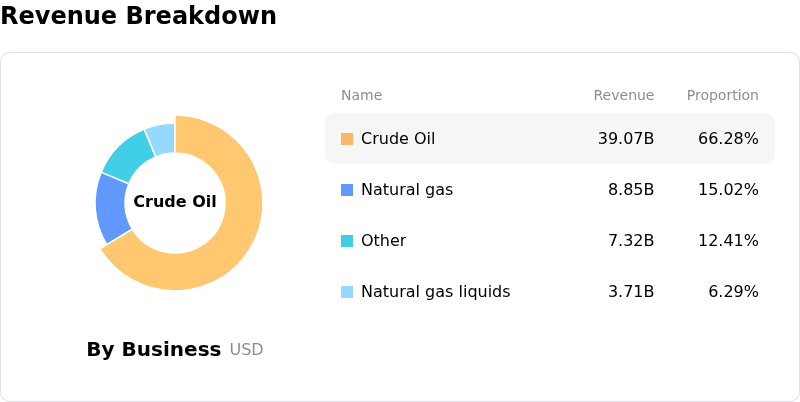
ConocoPhillips (COP) is in the Energy - Fossil Fuels industry. Its latest annual revenue is $58.94B, ranking 13 in the industry. The net profit is $7.96B, ranking 7 in the industry. Company Profile
Over the past month, multiple analysts have rated the company as Buy, with an average price target of $140.84, a high of $183.00, and a low of $111.00.
More details about ConocoPhillips (COP)
Company Specific Risks:
- ConocoPhillips reported lower net income in the first quarter of 2026, with earnings declining to $2.18 billion from $2.85 billion year-over-year, which led to an initial stock decline.
- Analysts have expressed concerns regarding ConocoPhillips' relatively high oil breakeven price of approximately $53 WTI needed to cover capital expenditures and dividends, which is considered uncompetitive compared to industry peers.
- The company's 2026 production outlook was lowered by approximately 5 million barrels of oil equivalent per day at the midpoint, accompanied by challenges from softer production and higher capital expenditures.
- Significant long-cycle investments in projects such as Port Arthur LNG and Willow are not expected to commence operations for several years, which contributes to a lower debt-adjusted free cash flow yield and ties up capital without immediate returns.
Nothing in this material constitutes investment advice, personal recommendation, investment research, an offer, or a solicitation to buy or sell any financial instrument. The content has been prepared without consideration of your individual investment objectives, financial situation, or needs, and should not be treated as such.
Past performance is not a reliable indicator of future performance and/or results. Forward-looking scenarios or forecasts are not a guarantee of future performance. Actual results may differ materially from those anticipated.
Mitrade makes no representation or warranty as to the accuracy or completeness of the information provided and accepts no liability for any loss arising from reliance on such information.
Recommended Articles


