



International Business Machines Corp Stock (IBM) Moved Down by 5.49% on Jun 18: What Investors Need To Know
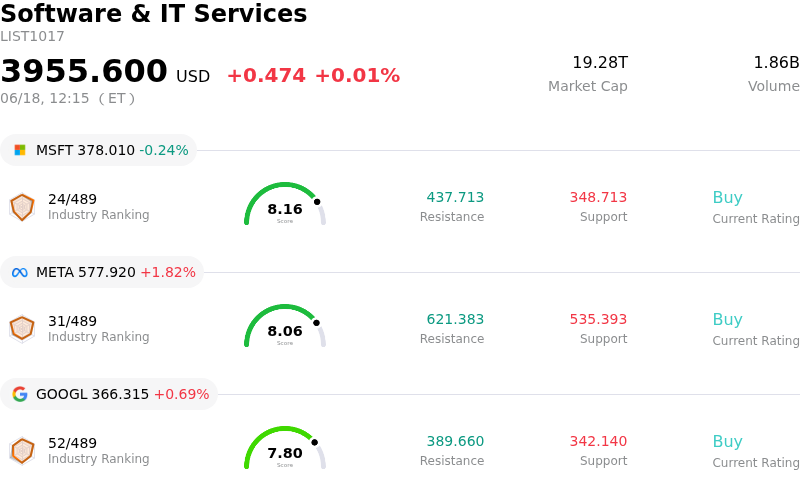
International Business Machines Corp (IBM) moved down by 5.49%. The Software & IT Services sector is up by 0.01%. The company underperformed the industry. Top 3 stocks by turnover in the sector: Microsoft Corp (MSFT) down 0.38%; Meta Platforms Inc (META) up 1.82%; Alphabet Inc Class A (GOOGL) up 0.69%.
What is driving International Business Machines Corp (IBM)’s stock price down today?
The significant downward pressure and intraday volatility experienced by International Business Machines (IBM) shares are primarily driven by a combination of sector-specific demand warnings, a self-published study highlighting enterprise AI bottlenecks, and a broader macroeconomic pivot toward hawkish monetary policy.
The primary catalyst for the selloff was a disappointing forward outlook from industry bellwether Accenture, which narrowed its full-year sales guidance. This downbeat guidance triggered a widespread selloff across the information technology services and consulting sector, as investors reassessed near-term demand visibility and corporate IT spending. Because IBM's own consulting division has already been facing growth headwinds, the negative signal from its main peer intensified fears that rapid AI automation and tighter enterprise budgets are cannibalizing traditional consulting fee structures and consulting-driven revenue.
Further weighing on the stock was a recent global study released by IBM itself, which revealed that ninety-one percent of enterprise executives do not fully understand their AI dependencies and feel locked into systems they cannot easily modify. Analysts quickly warned that these widespread control gaps, sovereignty compliance issues, and integration bottlenecks could prompt corporate clients to delay large-scale AI deployment cycles. This represents a direct threat to the near-term monetization runway of IBM’s core hybrid cloud and watsonx platforms, casting doubt on how quickly its massive generative AI pipeline can convert into realized earnings.
These microeconomic concerns were compounded by a major shift in the macroeconomic landscape. The Federal Reserve recently delivered a distinctly hawkish monetary policy surprise. While the central bank kept interest rates steady, the updated Summary of Economic Projections showed that a significant portion of policymakers now expect a rate hike by the end of the year to combat persistent inflation. The Fed also removed forward guidance, transitioning to a highly data-dependent model. This hawkish posture drove Treasury yields higher, triggering sector-wide multiple compression across tech stocks that was further exacerbated by broader market profit-taking.
Finally, the sharp decline reflects a continuation of a technical correction from IBM's recent record highs. Having surged to peak valuations earlier in the month, the stock's premium forward earnings multiple has come under scrutiny, especially as management previously left full-year guidance unchanged despite solid initial quarterly results. The confluence of sector-wide consulting weakness, AI integration anxieties, hawkish central bank policies, and stretched valuations has prompted institutional investors to reassess risk, leading to heightened selling pressure.
Technical Analysis of International Business Machines Corp (IBM)
Technically, International Business Machines Corp (IBM) shows a MACD (12,26,9) value of -7.883, indicating a neutral signal. The RSI at 47.789 suggests neutral condition and the Williams %R at 99.334 suggests oversold condition. Please monitor closely.
Media Coverage of International Business Machines Corp (IBM)
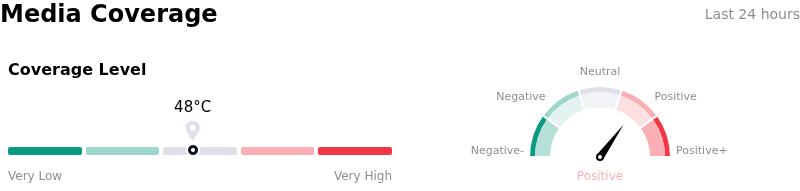
In terms of media coverage, International Business Machines Corp (IBM) shows a coverage score of 48, indicating a moderate level of media attention. The overall market sentiment index is currently in bullish zone.
Fundamental Analysis of International Business Machines Corp (IBM)
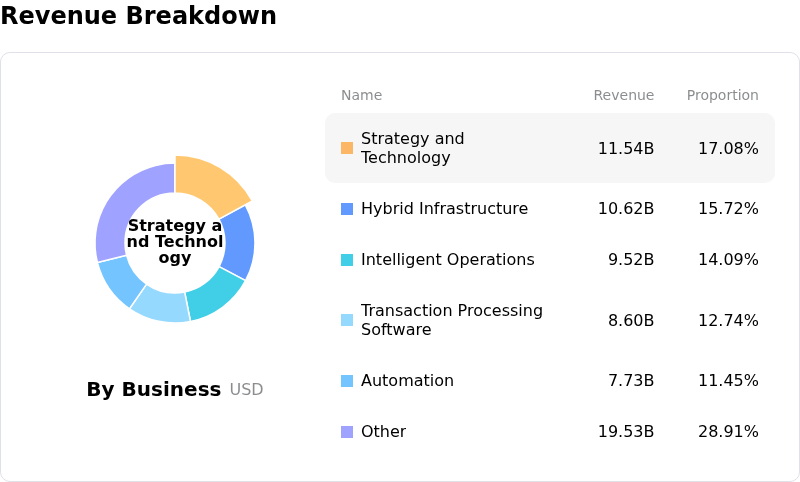
International Business Machines Corp (IBM) is in the Software & IT Services industry. Its latest annual revenue is $67.53B, ranking 7 in the industry. The net profit is $10.59B, ranking 11 in the industry. Company Profile
Over the past month, multiple analysts have rated the company as Buy, with an average price target of $284.95, a high of $375.00, and a low of $195.00.
More details about International Business Machines Corp (IBM)
Company Specific Risks:
- Collateral Downside from IT Services Slump: On June 18, 2026, IBM shares slid following a sector-wide sell-off triggered by peer Accenture (ACN) narrowing its full-year revenue guidance. This industry pullback highlights immediate enterprise IT spending headwinds, placing heavy pressure on IBM's lagging Consulting division, which previously grew by just 1% in the first quarter.
- Enterprise AI Integration and Sovereignty Bottlenecks: A global study released by the IBM Institute for Business Value on June 17, 2026, revealed that 91% of enterprise executives do not fully understand their AI dependencies and 71% face difficult vendor lock-in hurdles. Analysts warn that these technical and regulatory compliance "control gaps" will likely cause enterprise clients to delay large-scale deployments, dragging down the near-term monetization of IBM's watsonx and hybrid-AI platforms.
- Margin Compression from Massive Quantum Outlays: IBM's formalized strategic commitment to invest $10 billion over five years in quantum computing, alongside a $1 billion investment in a new quantum wafer foundry, introduces intense near-term capital-allocation and execution risks. Because commercialization and fault-tolerant systems are not anticipated until 2029, this heavy cash outflow is expected to strain operating margins before generating visible returns.
- Valuation Premium Exposure and Momentum Reversal: Following an early June surge to a record high of $333, the stock has experienced a sharp 16% reversal, exposing a fragile shift in market sentiment. Because management chose to maintain its full-year guidance despite a strong Q1 print, institutional analysts are increasingly skeptical that IBM's mature top-line growth profile can justify its premium valuation multiple (trading above 22x forward earnings).
Nothing in this material constitutes investment advice, personal recommendation, investment research, an offer, or a solicitation to buy or sell any financial instrument. The content has been prepared without consideration of your individual investment objectives, financial situation, or needs, and should not be treated as such.
Past performance is not a reliable indicator of future performance and/or results. Forward-looking scenarios or forecasts are not a guarantee of future performance. Actual results may differ materially from those anticipated.
Mitrade makes no representation or warranty as to the accuracy or completeness of the information provided and accepts no liability for any loss arising from reliance on such information.
Recommended Articles


