



Palladium (XPDUSD) Is down 2.06% on Jun 19: Key Drivers to Watch
Palladium (XPDUSD) is down 2.06% at Jun 19 01:00(ET), now at $1251.26, with a 7-day down of 2.41%.
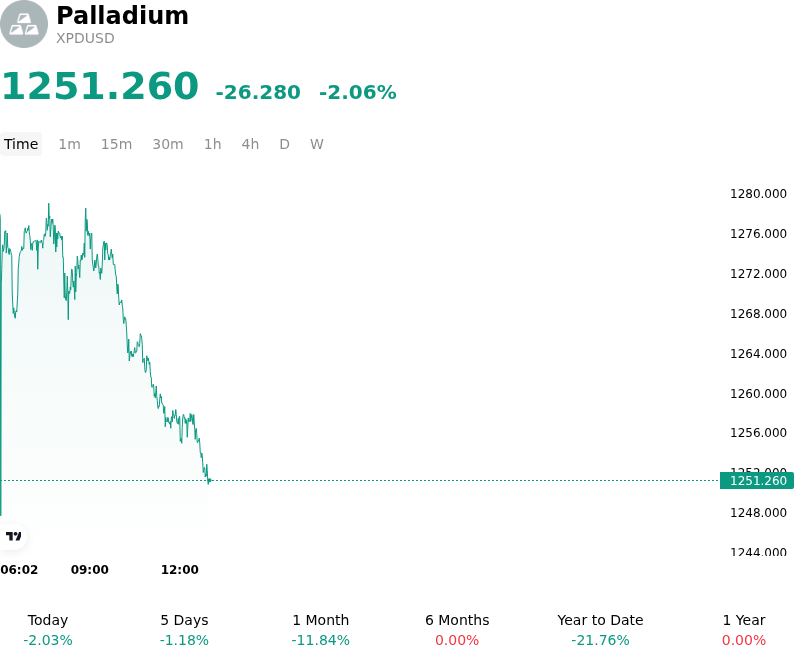
What is driving Palladium (XPDUSD)’s stock price down today?
The recent downward pressure on palladium is primarily driven by a significant hawkish shift in macroeconomic policy expectations and an easing of geopolitical risk premiums, which have collectively altered near-term demand and investor positioning.
The primary catalyst behind the selloff is the Federal Reserve's updated monetary policy guidance. Although the Federal Open Market Committee kept interest rates steady, its newly released Summary of Economic Projections and updated dot plot delivered a hawkish surprise. A majority of policymakers now signal at least one more rate hike before the end of the year, alongside upward revisions to inflation expectations. This indicates that monetary policy will remain restrictive for longer. The resulting appreciation of the US dollar and rise in global bond yields have significantly diminished the appeal of non-yielding precious metals, sparking broad liquidations across the complex.
On the geopolitical front, a cooling of international tensions has further stripped away the risk premium supporting palladium. The signing of a preliminary peace agreement between the United States and Iran aimed at stabilizing the Middle East and reopening the Strait of Hormuz has successfully mitigated supply disruption fears. While the normalization of global shipping routes is fundamentally positive for industrial supply chains, the actualization of this peace agreement prompted a swift unwinding of defensive safe-haven holdings, triggering capital outflows from metals.
From a demand perspective, the metal continues to face structural headwinds, particularly within the automotive sector, which accounts for the vast majority of global palladium consumption. Ongoing shifts toward alternative powertrain technologies and the substitution of palladium with more cost-effective platinum in catalytic converters have capped long-term demand expectations. Although lower energy prices and resolved shipping bottlenecks could support broader automotive manufacturing volumes in the long run, the immediate risk-off sentiment and rising borrowing costs are currently curbing industrial purchasing activity and keeping physical buying muted.
Ultimately, the combination of a strengthening US dollar, elevated interest rate expectations, and a declining geopolitical risk premium has prompted a repricing of the palladium market. Investors continue to monitor global manufacturing purchasing managers' indexes and central bank rhetoric to gauge whether this weakness reflects a temporary correction or a deeper acceleration of structural surpluses.
Technical Analysis of Palladium (XPDUSD)
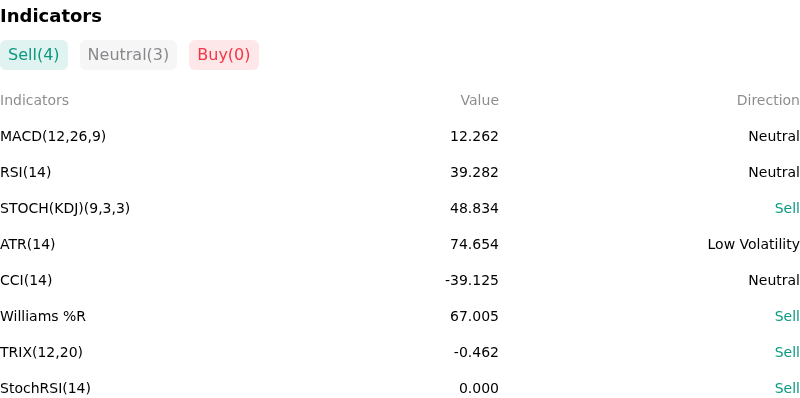
Technically, Palladium (XPDUSD) shows a MACD (12,26,9) value of 12.262, indicating a neutral signal. The RSI at 39.282 suggests neutral condition and the Williams %R at 67.005 suggests sell condition. Please monitor closely.
More details about Palladium (XPDUSD)
Recent Events and Risks:
- Federal Reserve Hawkishness and Dollar Strength: A hawkish surprise from the Federal Reserve's mid-June 2026 policy meeting—where the updated "dot plot" revealed policymaker expectations for an additional rate hike and a higher year-end inflation outlook—has reinvigorated the U.S. Dollar and pushed bond yields higher. This monetary tightening has triggered a broad liquidation wave across precious and industrial metals, causing spot palladium (XPDUSD) to drop nearly 3% on consecutive sessions (June 17 and 18).
- Easing Geopolitical Risk Premium: Progress toward an interim U.S.-Iran peace agreement discussed at the G7 summit (June 15–17, 2026) has significantly defused Middle East shipping and energy concerns. The resulting drop in crude oil prices and lower global inflation expectations have prompted a rapid unwind of safe-haven risk premiums, pulling XPDUSD down from its June 16 peak of $1,366 toward $1,276.
- Accelerating Structural Demand Destruction: Institutional updates, including a recent price target cut by UBS, have highlighted a widening global palladium surplus for 2026. This oversupply is driven by the ongoing automotive transition toward battery electric vehicles (BEVs)—which do not use catalytic converters—and the accelerating industrial substitution of platinum for palladium in gasoline engines, severely capping long-term price recovery.
- Aggressive Producer Hedging and Technical Breakdown: Recent Commitment of Traders (COT) data reveals a bearish divergence, with commercial producers hedging aggressively at current levels while large speculative net-long positions weaken. This shift in market structure, combined with XPDUSD breaking below its short- and medium-term trend lines to test key support near $1,300, has heightened the risk of stop-loss triggers and forced technical liquidations.
Nothing in this material constitutes investment advice, personal recommendation, investment research, an offer, or a solicitation to buy or sell any financial instrument. The content has been prepared without consideration of your individual investment objectives, financial situation, or needs, and should not be treated as such.
Past performance is not a reliable indicator of future performance and/or results. Forward-looking scenarios or forecasts are not a guarantee of future performance. Actual results may differ materially from those anticipated.
Mitrade makes no representation or warranty as to the accuracy or completeness of the information provided and accepts no liability for any loss arising from reliance on such information.
Recommended Articles


