



RTX Corp Stock (RTX) Moved Down by 3.61% on Jun 19: Facts Behind the Movement
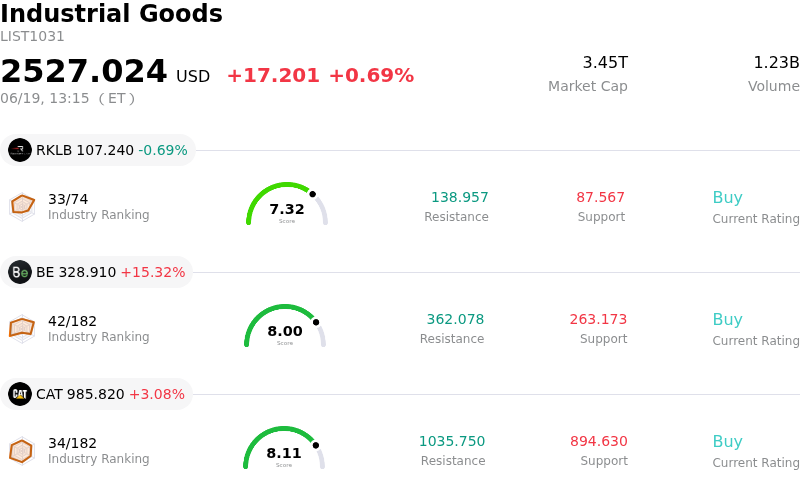
RTX Corp (RTX) moved down by 3.61%. The Industrial Goods sector is up by 0.69%. The company underperformed the industry. Top 3 stocks by turnover in the sector: Rocket Lab USA Inc (RKLB) down 0.69%; Bloom Energy Corp (BE) up 15.32%; Caterpillar Inc (CAT) up 3.08%.
What is driving RTX Corp (RTX)’s stock price down today?
The downward pressure and intraday volatility observed in RTX Corporation shares are primarily driven by a dramatic shift in the global geopolitical landscape, macroeconomic headwinds, and localized execution challenges. A major catalyst impacting the defense sector is the reduction of geopolitical risk premiums. Following news of a peace agreement between the United States and Iran, which has helped cool Middle East tensions and restore key shipping corridors like the Strait of Hormuz, defensive and defense-oriented stocks have experienced a notable contraction. This sudden de-escalation of international friction has triggered profit-taking among investors who had previously bid up defense contractors as geopolitical hedges.
Simultaneously, broader macroeconomic factors are weighing heavily on the capital-intensive industrial sector. Persistent concerns regarding the Federal Reserve’s hawkish stance and the likelihood of sustained high interest rates have pressured large-cap aerospace firms. For a highly leveraged company like RTX, elevated interest rates raise capital costs and restrict short-term liquidity. This macro environment has forced a market-wide re-evaluation of premium-valued industrial giants, compounding the selling pressure on the stock.
On the corporate front, RTX's divestiture of its small satellite manufacturing and mission services arm, Blue Canyon Technologies, to MDA Space for $620 million in cash was announced. While this transaction streamlines RTX's massive corporate structure and provides immediate liquidity, it also represents the offloading of a high-growth space intelligence asset. Investors are closely scrutinizing the strategic implications of this divestiture, as it potentially limits RTX's direct exposure to the booming commercial and defense space markets, adding to the day's volatile trading sentiment.
Furthermore, execution risks remain a core focus for market participants. Although RTX boasts an impressive backlog of orders, its valuation is heavily dependent on manufacturing acceleration. The aerospace industry continues to grapple with supply chain bottlenecks and labor shortages, which slow the rate at which backlogged orders convert into recognized revenue. Specifically, the Pratt & Whitney segment is still navigating the costly and protracted inspection cycle related to the Geared Turbofan engine powder metal manufacturing defect. The associated multi-billion-dollar cash drain and compensation liabilities weigh on the company's financial flexibility.
Finally, technical factors have exacerbated the downward move. After a strong upward run earlier in the week—boosted by Wall Street analysts putting the stock on an upside catalyst watch—RTX entered technically overbought territory. With daily oscillators signaling technical overextension and no fresh positive catalysts to sustain the rally, the stock was highly vulnerable to a short-term pullback. The convergence of macro rate worries, easing geopolitical premiums, and portfolio rebalancing has driven the stock lower as institutional players lock in recent gains.
Technical Analysis of RTX Corp (RTX)
Technically, RTX Corp (RTX) shows a MACD (12,26,9) value of 2.881, indicating a buy signal. The RSI at 55.268 suggests neutral condition and the Williams %R at 39.639 suggests buy condition. Please monitor closely.
Media Coverage of RTX Corp (RTX)
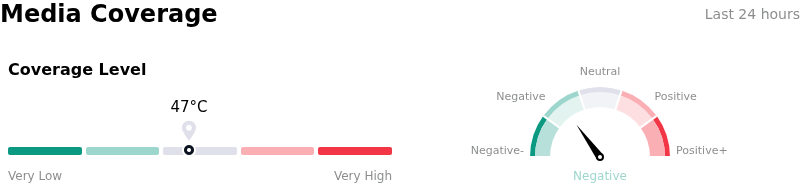
In terms of media coverage, RTX Corp (RTX) shows a coverage score of 47, indicating a moderate level of media attention. The overall market sentiment index is currently in bearish zone.
Fundamental Analysis of RTX Corp (RTX)
RTX Corp (RTX) is in the Industrial Goods industry. Its latest annual revenue is $88.60B, ranking 2 in the industry. The net profit is $6.73B, ranking 2 in the industry. Company Profile
Over the past month, multiple analysts have rated the company as Buy, with an average price target of $207.29, a high of $240.00, and a low of $115.00.
More details about RTX Corp (RTX)
Company Specific Risks:
- Escalating GTF Engine Litigation and Financial Liabilities: RTX's Pratt & Whitney division faces significant cash drains from active Airbus damages litigation over chronic Geared Turbofan (GTF) engine delivery shortfalls. This risk is further intensified by Italian carrier ITA Airways nearing its final decision window to sue RTX over grounded fleets, threatening to expand multi-billion-dollar liabilities and accelerate market share loss to rival CFM International.
- Backlog Conversion and Supply Chain Execution Vulnerabilities: Despite a record backlog of $271 billion, RTX remains highly vulnerable to manufacturing and supply chain bottlenecks. Stalled progress on specialized metal castings and forgings has kept engine repair turnaround times elevated at nearly 300 days, preventing the company from converting its massive backlog into realized revenue and free cash flow quickly enough to support its premium valuation.
- Raytheon Margin Compression on Fixed-Price Contracts: RTX's defense segment faces persistent operating margin dilution as mature, high-margin legacy programs are replaced by fixed-price development and production contracts. These newer agreements are highly susceptible to cost overruns, raw material inflation (specifically titanium), and unmitigated tariff headwinds that the company must absorb internally.
- Deflation of Geopolitical Risk Premiums: The sudden easing of Middle East tensions, marked by the June 18, 2026 US-Iran peace agreement ("Islamabad Memorandum"), has triggered immediate intraday selling pressure on defensive and industrial stocks, deflating the geopolitical risk premiums that previously drove institutional demand for RTX's military defense portfolio.
Nothing in this material constitutes investment advice, personal recommendation, investment research, an offer, or a solicitation to buy or sell any financial instrument. The content has been prepared without consideration of your individual investment objectives, financial situation, or needs, and should not be treated as such.
Past performance is not a reliable indicator of future performance and/or results. Forward-looking scenarios or forecasts are not a guarantee of future performance. Actual results may differ materially from those anticipated.
Mitrade makes no representation or warranty as to the accuracy or completeness of the information provided and accepts no liability for any loss arising from reliance on such information.
Recommended Articles


