



Platinum (XPTUSD) Drops on Jun 23: Key Factors to Watch
Platinum (XPTUSD) is down 2.15% at Jun 23 01:00(ET), now at $1644.88, with a 7-day down of 8.99%.
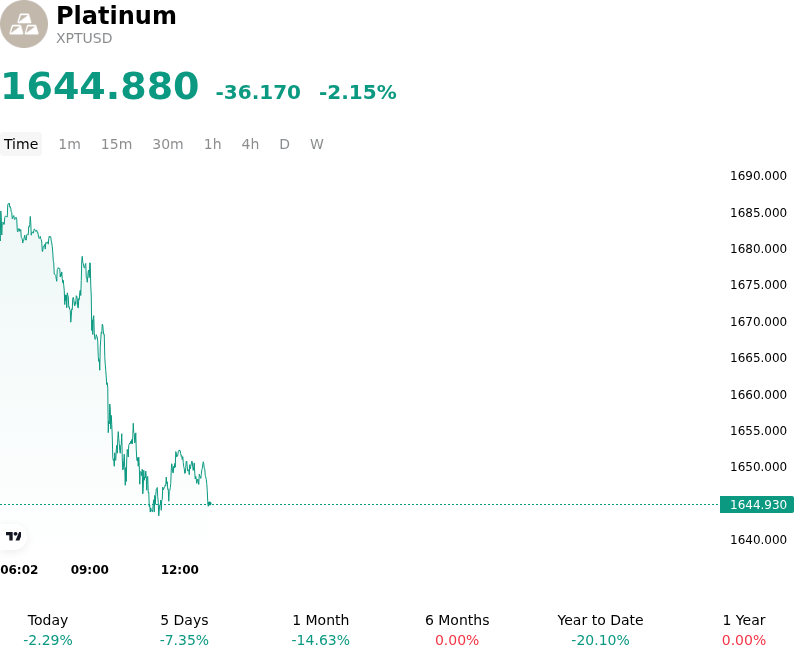
What is driving Platinum (XPTUSD)’s stock price down today?
The recent downward pressure on platinum is primarily driven by a significant hawkish shift in monetary policy expectations and a rallying US dollar. Following the Federal Reserve's June policy updates under the leadership of Chairman Kevin Warsh, the central bank signaled an unexpectedly aggressive stance, with several policymakers projecting potential rate increases before the end of the year. This higher-for-longer interest rate outlook has pushed real US Treasury yields higher and propelled the dollar to multi-month highs. As a non-yielding asset, platinum’s investment appeal has severely diminished in this environment, triggering broader liquidations across the precious metals complex.
Simultaneously, a notable cooling of geopolitical risks in the Middle East has eroded the safe-haven and inflation-hedging premiums that had previously supported prices. Progress toward a formal peace agreement between the United States and Iran has led to an easing of energy-related anxieties and a subsequent decline in crude oil prices. The prospective normalization of global energy flows has dampened near-term inflation expectations, prompting institutional investors to unwind their defensive positions and accelerate profit-taking in the futures and spot markets.
On the demand side, near-term fundamental indicators have softened considerably. Updated market projections for the year forecast a contraction in global platinum demand. This weakness is driven by declining consumption in the automotive and jewelry sectors, alongside a sharp deceleration in retail investment inflows and substantial liquidations of exchange-traded fund holdings. Reduced demand for catalytic converters, amid slower global automotive fabrication and economic headwinds, has further weighed on the metal's near-term outlook.
This softening of demand has significantly narrowed the projected global platinum market deficit. Although long-term structural supply deficits remain a concern due to constrained output from primary producers in South Africa and Russia, these tight supply dynamics are currently being overshadowed by cyclical demand headwinds. The contraction of the market deficit has undermined the aggressive supply-squeeze narrative that underpinned platinum's historic peaks earlier in the year, leaving the metal highly vulnerable to macro-driven capital outflows and technical selling pressure.
Technical Analysis of Platinum (XPTUSD)
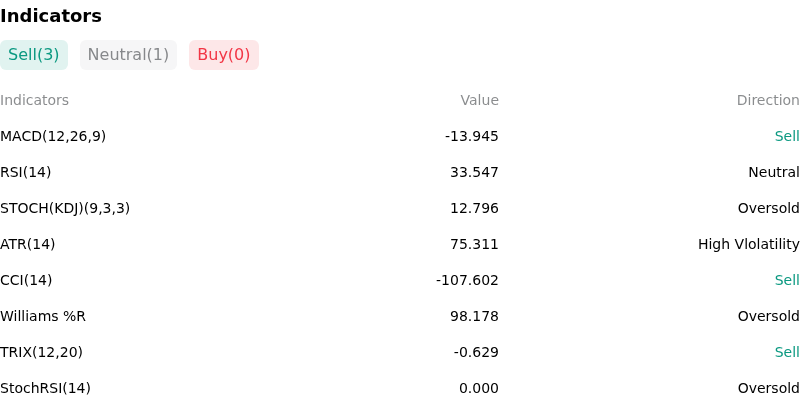
Technically, Platinum (XPTUSD) shows a MACD (12,26,9) value of -13.945, indicating a sell signal. The RSI at 33.547 suggests neutral condition and the Williams %R at 98.178 suggests oversold condition. Please monitor closely.
More details about Platinum (XPTUSD)
Recent Events and Risks:
- Hawkish Federal Reserve Monetary Outlook: The Federal Reserve’s hawkish "higher-for-longer" monetary policy signals—emphasizing persistent inflation and indicating support for elevated interest rates through late 2026—have pushed real yields and the US Dollar Index higher. This macroeconomic headwind has increased the opportunity cost of holding non-yielding precious metals, driving spot platinum (XPTUSD) down toward six-month lows near $1,634/oz.
- Erosion of Geopolitical Premium and Speculative Liquidation: Recent diplomatic progress and hopes for an interim US-Iran agreement have substantially cooled the global inflation and energy-shock premiums that previously supported precious metals. This has triggered aggressive long-liquidation by algorithmic and speculative funds, driving physical metal outflows of over 200,000 ounces from NYMEX warehouses and severely pressuring spot prices.
- Contracting Global Investment and Automotive Demand: Updated market projections forecast global platinum demand to contract by up to 9% year-on-year. This slump is driven by a massive projected drop in investment demand—marked by heavy ETF and exchange stock outflows—coupled with a 12% decline in jewelry demand and softening automotive consumption due to ICE vehicle light-duty production cuts, narrowing the global supply deficit to its lowest level in four years.
- Sluggish Downstream Physical Spot Market Activity: Downstream industrial and manufacturing buyers are maintaining comfortable stockpiles and adopting a strict "wait-and-see" stance. This lack of physical buying interest has caused spot trading to remain highly sluggish, preventing physical demand from stepping in to support prices and leaving XPTUSD vulnerable to further technical selling below the key $1,635/oz support level.
Nothing in this material constitutes investment advice, personal recommendation, investment research, an offer, or a solicitation to buy or sell any financial instrument. The content has been prepared without consideration of your individual investment objectives, financial situation, or needs, and should not be treated as such.
Past performance is not a reliable indicator of future performance and/or results. Forward-looking scenarios or forecasts are not a guarantee of future performance. Actual results may differ materially from those anticipated.
Mitrade makes no representation or warranty as to the accuracy or completeness of the information provided and accepts no liability for any loss arising from reliance on such information.
Recommended Articles


