



BTC Leads Strongly: Should You Buy the BTC Dip or Strategies That Have Hit Rock Bottom?
TradingKey - As of 8:30 AM ET on March 17, Bitcoin (BTCUSD) closed at $73,800. Since last week, Bitcoin has delivered a stellar performance, leading global assets after previously reaching as high as $76,000. Meanwhile, according to Strategy (MSTR.US) disclosures, the company recently increased its holdings by 22,337 Bitcoins at an average price of approximately $70,200 per coin, involving an investment of about $1.57 billion.
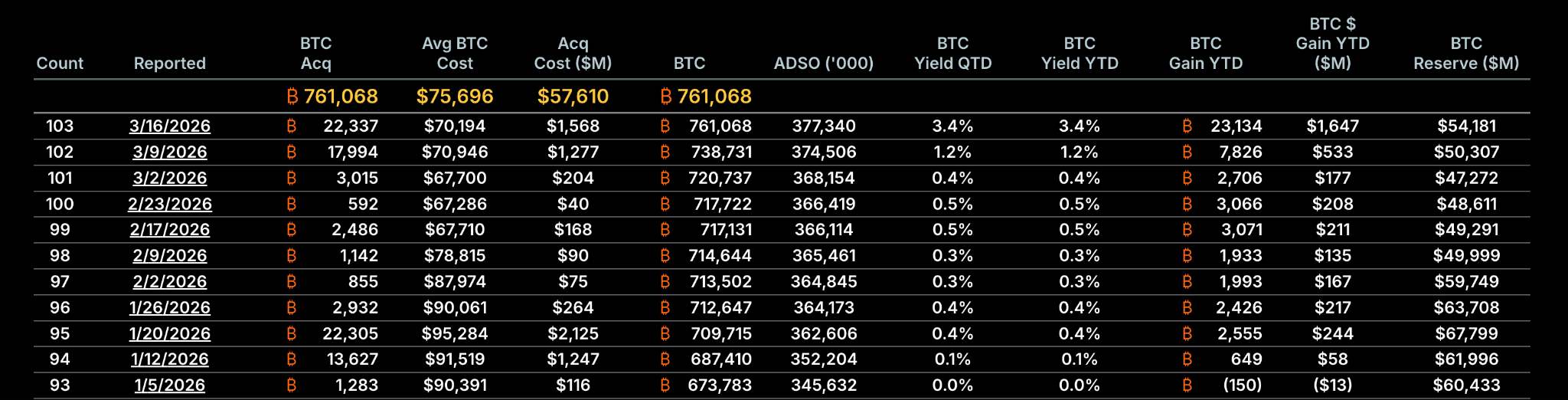
The company stated that as of March 15, its total holdings reached 761,068 Bitcoins, with a historical purchase cost of approximately $57.61 billion, representing an average purchase price of about $75,700 per coin.
Is now a good time to buy BTC?
From a valuation perspective, Bitcoin's core support continues to stem from macro liquidity expectations and the alignment of supply and demand. Currently, in the global market, liquidity expectations are tightening due to surging energy prices driven by Middle East tensions. Although the U.S. is in a rate-cut cycle, expectations for cuts have been weakened by inflation risks. Tightening global interest rates may exert significant pressure on risk assets like Bitcoin that benefit from loose liquidity.
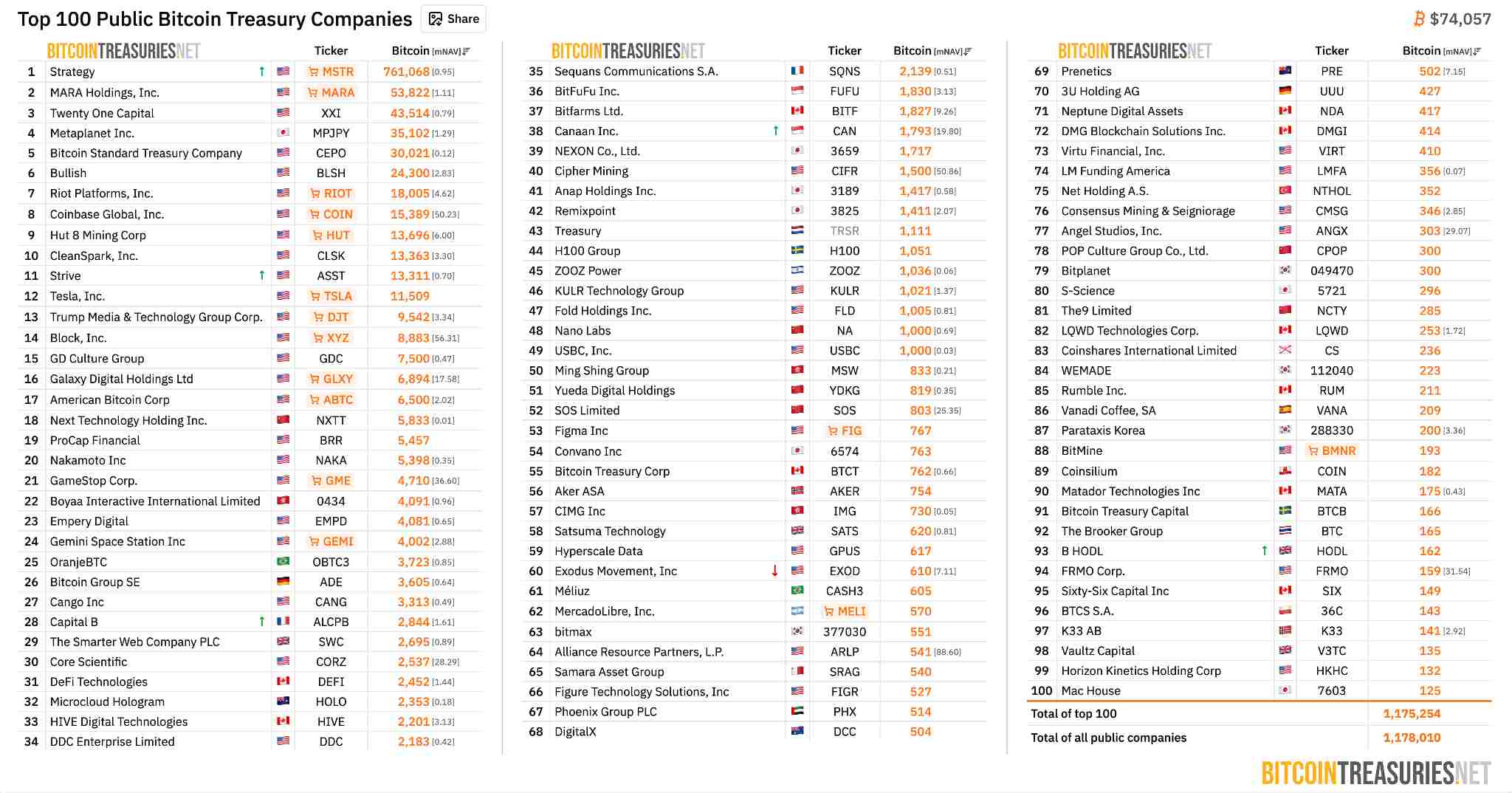
On the other hand, as of March 9, 20 million Bitcoins have been mined, with nearly 1 million remaining. Mining difficulty continues to climb, leading to a marginal decline in Bitcoin supply. Media reports suggest the final Bitcoin may not be mined until the 22nd century. On the demand side, the top 100 companies already own nearly 6% of the total Bitcoin supply, a proportion that is trending upward, indicating that demand continues to rise.
Furthermore, countries such as the U.S. and Russia are gradually implementing crypto legislation to regulate and refine crypto assets. For crypto assets, this may increase the reliance of nations, institutions, and even individuals on these assets, thereby signaling a rise in demand.
Looking at Bitcoin's historical trends, the price fell from a high of $126,000 in October 2025 to its current level of $74,100, a decline of nearly 40%.
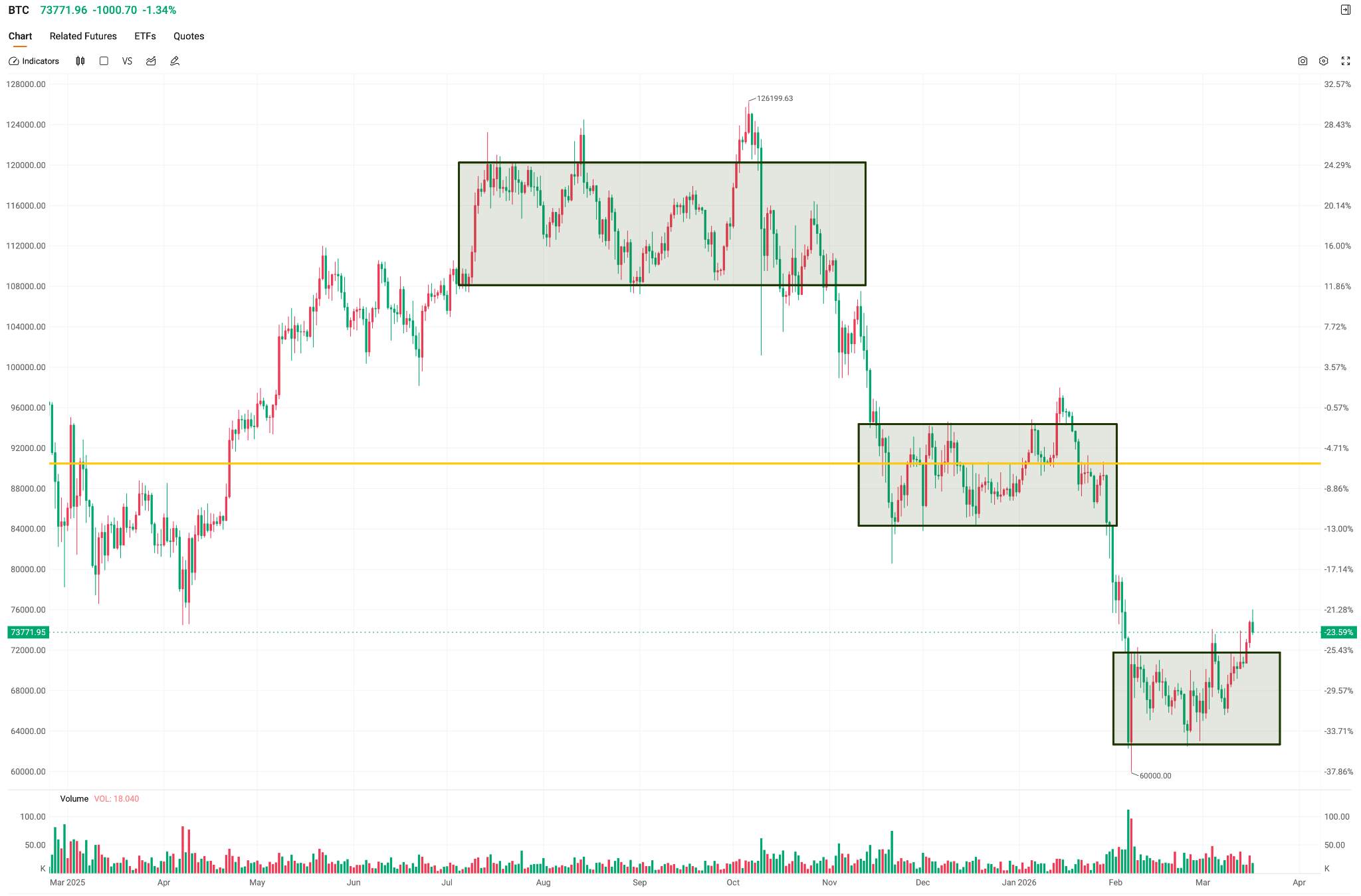
Bitcoin has experienced multiple false breakouts following range-bound volatility—where a breakout fails to maintain its momentum and turns downward after failing to stabilize during a retracement.
Regarding the recent surge to $76,000, we still believe that this breakout has yet to be confirmed as official. If Bitcoin rebounds quickly after a retracement, there may be an entry opportunity; otherwise, in the short term, Bitcoin remains dominated by bears.
Is now a critical juncture to buy Strategy?
We believe Strategy acts as a sentiment amplifier for Bitcoin. Comparing the two, we find that Strategy's volatility is nearly double that of Bitcoin. It is difficult to gauge whether Strategy holds reasonable investment value, but it is certain that it is not suitable for most investors. Investing in Strategy is akin to trading Bitcoin with leverage; given the lack of a clear trend in Bitcoin's current price action, Strategy amplifies the risks borne by investors.
On the other hand, Strategy's trading hours are tied to the U.S. stock market, making it difficult to match Bitcoin in real-time. This leaves some investors in a passive position, making it hard to execute stop-loss orders in time when systemic risks arise, thereby increasing trading uncertainty.
For long-term Bitcoin bulls who ignore the risks of short-term volatility, Strategy is an asset worth considering. However, establishing a strict trading strategy is particularly important—such as adding to positions when a drawdown reaches a certain threshold or adopting a dollar-cost averaging strategy during contrarian trading rather than making a lump-sum investment. Appropriate trading methods can help improve realized returns.
Nothing in this material constitutes investment advice, personal recommendation, investment research, an offer, or a solicitation to buy or sell any financial instrument. The content has been prepared without consideration of your individual investment objectives, financial situation, or needs, and should not be treated as such.
Past performance is not a reliable indicator of future performance and/or results. Forward-looking scenarios or forecasts are not a guarantee of future performance. Actual results may differ materially from those anticipated.
Mitrade makes no representation or warranty as to the accuracy or completeness of the information provided and accepts no liability for any loss arising from reliance on such information.
Recommended Articles


