



Applied Materials Inc Stock (AMAT) Moved Down by 3.49% on Jul 16: A Full Analysis
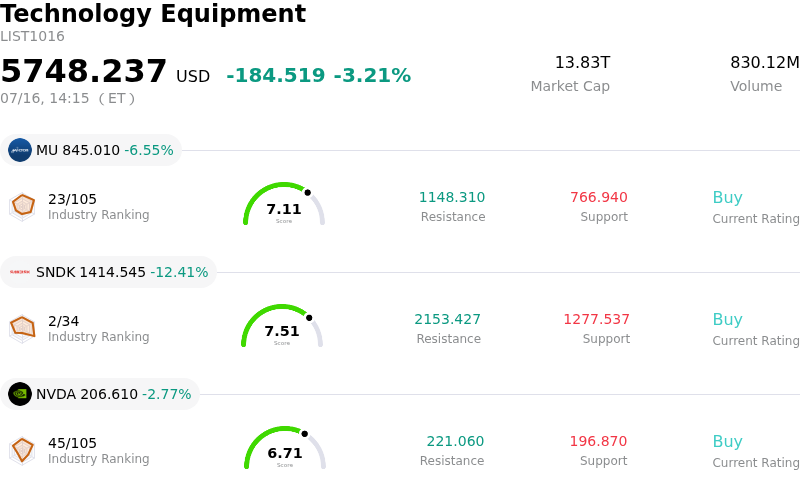
Applied Materials Inc (AMAT) moved down by 3.49%. The Technology Equipment sector is down by 3.21%. The company underperformed the industry. Top 3 stocks by turnover in the sector: Micron Technology Inc (MU) down 6.55%; SanDisk Corporation (SNDK) down 12.41%; NVIDIA Corp (NVDA) down 2.77%.
What is driving Applied Materials Inc (AMAT)’s stock price down today?
The downward pressure on Applied Materials today is primarily driven by a broader correction within the semiconductor equipment sector. Institutional investors appear to be de-risking following a period of rapid appreciation, fueled by concerns that the peak of the current capital expenditure cycle for artificial intelligence infrastructure may be approaching. When major chipmakers hint at a more measured pace for new fabrication plant construction, equipment providers like Applied Materials are often the first to experience a sentiment shift.
Compounding this sector-wide weakness are renewed anxieties regarding international trade policies. As a critical supplier of wafer fabrication equipment, the company remains highly sensitive to regulatory changes that could limit its ability to ship advanced tools to major overseas markets. Any indications of stricter export controls or heightened geopolitical friction tend to trigger automated sell programs and institutional portfolio rebalancing, leading to the heightened volatility observed in the session.
Furthermore, recent data points from the broader technology supply chain suggest a potential softening in demand for legacy node equipment. While the high-end logic and memory segments remain robust, a slowdown in automotive or industrial chip demand can weigh on the company’s diversified portfolio. This shift in the product mix often leads analysts to revise their gross margin expectations downward, prompting a more cautious valuation approach from the market.
From a macroeconomic perspective, the persistence of elevated interest rates continues to impact the cost of capital for capital-intensive industries. As the discount rate applied to future cash flows remains high, growth-oriented stocks in the semiconductor space face persistent valuation headwinds. The current movement reflects a combination of these fundamental industry concerns and a shift in market appetite away from high-beta technology names toward more defensive assets.
Technical Analysis of Applied Materials Inc (AMAT)
Technically, Applied Materials Inc (AMAT) shows a MACD (12,26,9) value of -23.197, indicating a neutral signal. The RSI at 50.535 suggests neutral condition and the Williams %R at 75.571 suggests sell condition. Please monitor closely.
Media Coverage of Applied Materials Inc (AMAT)
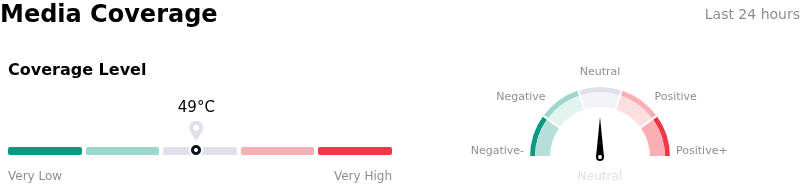
In terms of media coverage, Applied Materials Inc (AMAT) shows a coverage score of 49, indicating a moderate level of media attention. The overall market sentiment index is currently in neutral zone.
Fundamental Analysis of Applied Materials Inc (AMAT)
Applied Materials Inc (AMAT) is in the Technology Equipment industry. Its latest annual revenue is $28.37B, ranking 10 in the industry. The net profit is $7.00B, ranking 6 in the industry. Company Profile
Over the past month, multiple analysts have rated the company as Buy, with an average price target of $611.10, a high of $900.00, and a low of $308.00.
More details about Applied Materials Inc (AMAT)
Company Specific Risks:
- Disappointing Revenue Guidance: The company issued Q1 revenue guidance of $7.15 billion, missing the midpoint of analyst expectations ($7.22 billion), which has triggered concerns over a slowdown in the wafer fabrication equipment market.
- Sharp Contraction in China Revenue: Revenue contribution from China plummeted to 30% from 44% in the previous year, suggesting that the surge in demand from Chinese domestic customers has peaked or is being severely curtailed by trade restrictions.
- Persistent Regulatory and Legal Scrutiny: Ongoing investigations by the U.S. Department of Justice and the SEC regarding unauthorized shipments to sanctioned Chinese entities create a significant legal overhang and the risk of material financial penalties.
- Cyclical Weakness in Mainstream Segments: Despite strength in AI-related high-bandwidth memory, management commentary indicated persistent softness in the broader logic and foundry markets as customers defer capital expenditures for non-AI applications.
Nothing in this material constitutes investment advice, personal recommendation, investment research, an offer, or a solicitation to buy or sell any financial instrument. The content has been prepared without consideration of your individual investment objectives, financial situation, or needs, and should not be treated as such.
Past performance is not a reliable indicator of future performance and/or results. Forward-looking scenarios or forecasts are not a guarantee of future performance. Actual results may differ materially from those anticipated.
Mitrade makes no representation or warranty as to the accuracy or completeness of the information provided and accepts no liability for any loss arising from reliance on such information.
Recommended Articles


