



The British Pound bounces on a hike argument that lost 6-3 in July
- GBP/USD trades near 1.3530 after the 50-day EMA just under 1.3500 held again.
- BoE chief economist calls for a prompt move to 4%, a view outvoted 6-3 in July.
- Friday: BoE Governor at 08:50 GMT, US payrolls at 12:30 GMT, 56K consensus.
Sterling has spent Thursday recovering a little of what it lost this week, with GBP/USD trading near 1.3530, roughly a third of a percent higher, after the 50-day Exponential Moving Average (EMA) just under 1.3500 held for a second consecutive session. Thursday's low landed on the average almost to the pip before the pair climbed to a session high a couple of pips short of 1.3550 in the London afternoon. The bounce is a relief rally until a daily close above 1.3550 says otherwise.
Forty pips for the minority view
The sharper of the day's two legs was British, which has been rare this week. The Bank of England's chief economist released the text of an Edinburgh speech at 15:00 GMT arguing that Bank Rate should rise promptly from 3.75% to 4%, that he is uncomfortable with the wait-and-see stance of the majority, and that an early move need not open a prolonged series of increases. GBP/USD jumped from the 1.3500 area to its session high within the hour, roughly forty pips for a position that has already been outvoted.
That vote was 6-3 in July, the third consecutive meeting at which the hike camp lost, and the Governor spent last Friday at Jackson Hole explaining that second-round effects remain subdued and that the committee can afford to watch for now. July's headline inflation rate of 2.9% sits above target and the Bank's own central projection has it peaking near 3.2% in the fourth quarter, which is the material the dissenters are working with. The market has heard the same case at every meeting since April without it moving the majority, and it paid for it again on Thursday anyway.
The Dollar leg was borrowed
The earlier leg belonged to the Dollar and had nothing to do with Britain. A Fed governor said at 12:30 GMT that he would be inclined to support holding rates at the September 15-16 meeting if the inflation data due over the next two weeks keep behaving, and September hike odds on the FedWatch tool dropped to around 50% from above 60% on Wednesday. The Yen's surge to a one-month high on Bank of Japan hike expectations had already pushed Treasury yields lower before he spoke, and the Dollar Index slipped beneath 99.00 to its weakest since late August.
The awkward detail is what happened at 14:00 GMT in between. The Institute for Supply Management (ISM) services Purchasing Managers Index (PMI) beat at 55.4 against a 54.3 consensus, with the prices paid index climbing to 72.6 from 70.3, and the Dollar did not recover a pip on it. A Dollar that ignores a hot services prices reading two weeks before a coin-toss Fed meeting is a Dollar being sold on positioning, and positioning reverses faster than policy does.
The Governor speaks before the payrolls do
Friday belongs to two central bankers who speak four hours apart, and the British one goes first. The Governor delivers a keynote in London at 08:50 GMT, and if he repeats the Jackson Hole line that the committee is not pre-committed and can watch for now, Thursday's forty pips are exposed before New York is at its desk. The September 17 decision arrives one day after the August inflation figures on September 16, so Friday's speech is the last unscripted word from the majority before the data that will decide the vote.
US nonfarm payrolls at 12:30 GMT carry a 56K consensus after 23K jobs were lost in July, with the unemployment rate seen unchanged at 4.1% and average hourly earnings expected at 0.3% on the month and 3% YoY, down from 3.2%. The Fed Chair has said the committee's predominant focus is prices, which makes the report asymmetric for the pair: a soft number does not deliver the cut that would justify a weaker Dollar, while a firm one puts the September hike straight back into pricing. Next week is where the hold actually gets decided, with the Producer Price Index (PPI) on September 10 and the Consumer Price Index (CPI) on September 11, the two prints the governor's conditional was written around.
The British calendar offers almost nothing to counter it. Retail sales from the British Retail Consortium (BRC) land at 23:01 GMT on Monday, and Friday, September 11 brings July Gross Domestic Product (GDP) at 06:00 GMT after a 0.3% rise in June, alongside industrial and manufacturing production after falls of 0.2% and 0.5%, with the Bank's consumer inflation expectations survey at 08:30 GMT after a 4% reading. None of it changes the September vote. What changes the vote is the August inflation print at 06:00 GMT on September 16, and the Fed announces its own decision that same evening.
Levels and bias
Resistance: The 1.3550 line is the one that matters, with Thursday's high failing just beneath it and a daily close above it the first thing that would turn the bounce into a trend change. Above that, 1.3600 is the level that went in the final days of August, and the peak short of 1.3700 caps the whole August range.
Support: The 50-day EMA just under 1.3500 has now absorbed two tests in two days, and it decides whether Thursday was a floor or a pause. Beneath it, the 200-day EMA near 1.3400 is the last technical object before open ground, with 1.3350 and 1.3300 below it and 1.3200 the objective on an extension.
Bias: Bearish while 1.3550 caps. Thursday was a Dollar-selling day with a British garnish, the daily Stochastic Relative Strength Index (Stoch RSI) is still falling from above 90 and sits near 58, and the two events that could extend the bounce, a Governor turning hawkish and American inflation cooling, are both the minority outcome. Rallies into 1.3550 are for selling. A daily close above it invalidates the call and reopens 1.3600.
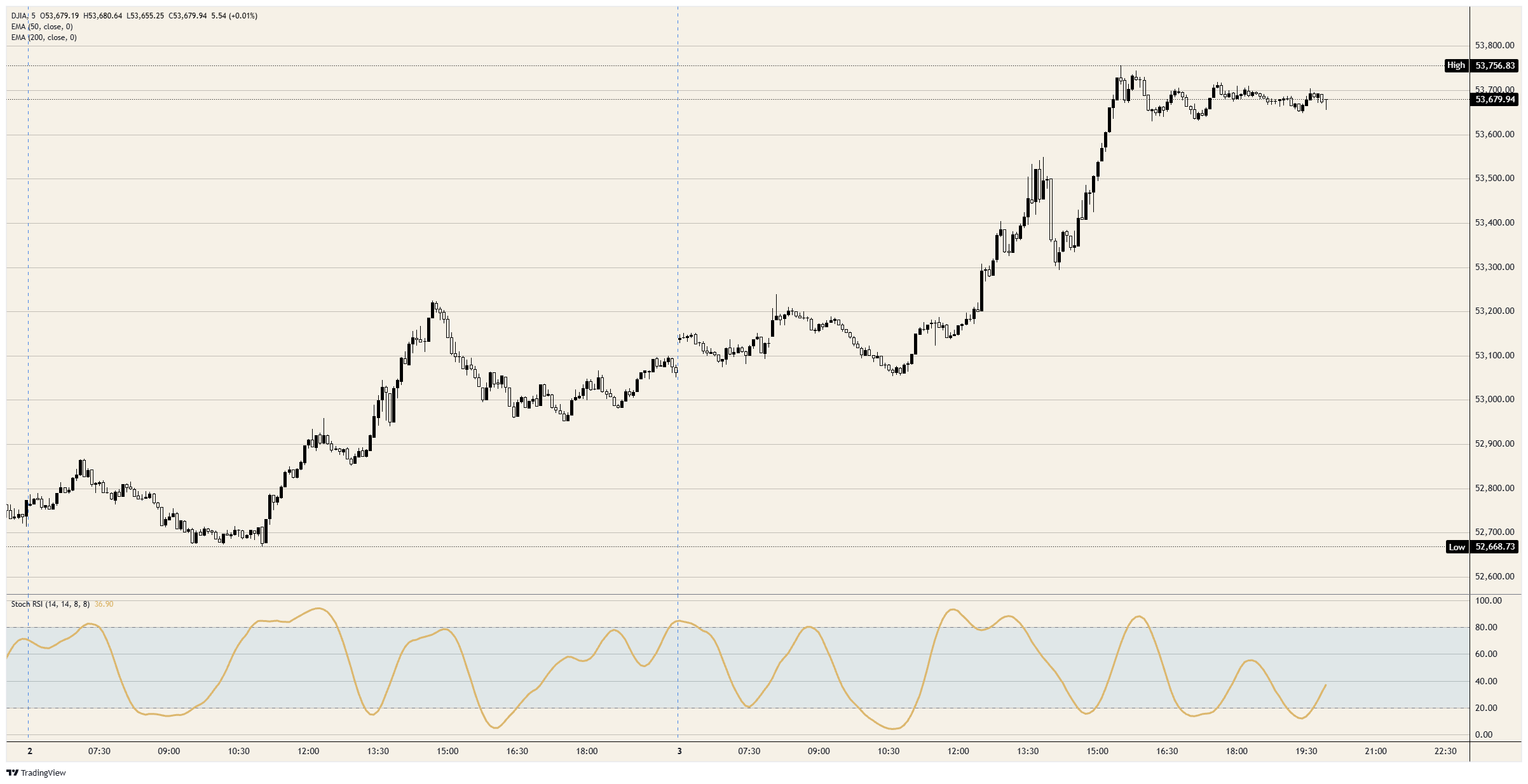
GBP/USD 5-minute chart
Pound Sterling FAQs
The Pound Sterling (GBP) is the oldest currency in the world (886 AD) and the official currency of the United Kingdom. It is the fourth most traded unit for foreign exchange (FX) in the world, accounting for 12% of all transactions, averaging $630 billion a day, according to 2022 data. Its key trading pairs are GBP/USD, also known as ‘Cable’, which accounts for 11% of FX, GBP/JPY, or the ‘Dragon’ as it is known by traders (3%), and EUR/GBP (2%). The Pound Sterling is issued by the Bank of England (BoE).
The single most important factor influencing the value of the Pound Sterling is monetary policy decided by the Bank of England. The BoE bases its decisions on whether it has achieved its primary goal of “price stability” – a steady inflation rate of around 2%. Its primary tool for achieving this is the adjustment of interest rates. When inflation is too high, the BoE will try to rein it in by raising interest rates, making it more expensive for people and businesses to access credit. This is generally positive for GBP, as higher interest rates make the UK a more attractive place for global investors to park their money. When inflation falls too low it is a sign economic growth is slowing. In this scenario, the BoE will consider lowering interest rates to cheapen credit so businesses will borrow more to invest in growth-generating projects.
Data releases gauge the health of the economy and can impact the value of the Pound Sterling. Indicators such as GDP, Manufacturing and Services PMIs, and employment can all influence the direction of the GBP. A strong economy is good for Sterling. Not only does it attract more foreign investment but it may encourage the BoE to put up interest rates, which will directly strengthen GBP. Otherwise, if economic data is weak, the Pound Sterling is likely to fall.
Another significant data release for the Pound Sterling is the Trade Balance. This indicator measures the difference between what a country earns from its exports and what it spends on imports over a given period. If a country produces highly sought-after exports, its currency will benefit purely from the extra demand created from foreign buyers seeking to purchase these goods. Therefore, a positive net Trade Balance strengthens a currency and vice versa for a negative balance.
Nothing in this material constitutes investment advice, personal recommendation, investment research, an offer, or a solicitation to buy or sell any financial instrument. The content has been prepared without consideration of your individual investment objectives, financial situation, or needs, and should not be treated as such.
Past performance is not a reliable indicator of future performance and/or results. Forward-looking scenarios or forecasts are not a guarantee of future performance. Actual results may differ materially from those anticipated.
Mitrade makes no representation or warranty as to the accuracy or completeness of the information provided and accepts no liability for any loss arising from reliance on such information.
Recommended Articles


