



South Korean retail investors pivot from Bitcoin to KOSPI amid AI-led rally in equities
- South Korean retail investors, a driving force for the global crypto market, shun Bitcoin as the local stock market trades near record highs amid strong demand for AI chips.
- Investors' risk appetite is rising in South Korean markets amid rising margin loans.
- The negative premium in the Korea Premium Index suggests reduced demand for Bitcoin in the country.
South Korean investors, well-known for leading the Asian market's demand for Bitcoin (BTC), are returning to their domestic equity markets as the Korea Composite Stock Price Index (KOSPI) hits record highs amid increasing AI chip demand. A surge in outstanding margin loans on Korean stocks reaffirms that investors' risk appetite is rising, while the negative Korea Premium Index signals a decline in Bitcoin exposure.
Retail demand heats up in East Asia
South Korea and Taiwan are leading gains in the Asian and global markets as capital rotation now focuses on chips powering the AI infrastructure. According to Bloomberg, South Korea has surpassed Canada as the seventh-largest stock market, reaching a record $4.59 trillion in May 2026.
Samsung and SK Hynix Inc., which account for roughly 45% of the Korean benchmark, are leading the market gains driven by rising global demand for AI chips. Samsung has crossed the $1 trillion valuation this year, while SK Hynix is up more than 100%.
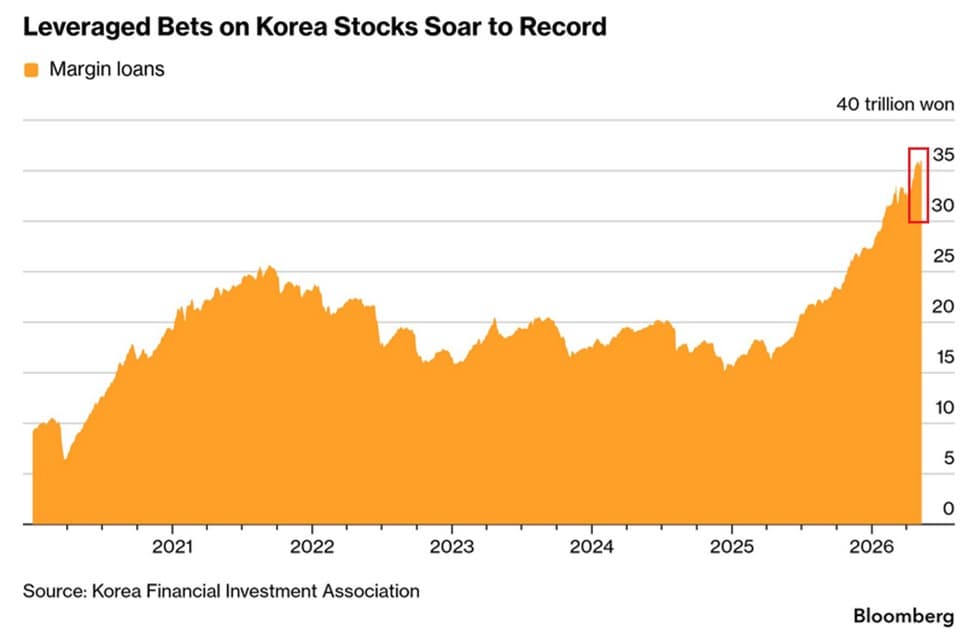
Bloomberg data also shows that retail investors are taking margin loans to buy stocks more than ever, reaching 36.3 trillion KRW, up 32% so far this year. The rising leveraged positions reflect a speculative frenzy toward all things AI in the retail market, which was previously captured by Bitcoin and meme coins. This can also explain the huge volatility surrounding the Korean benchmark.
South Korea loses appetite for Bitcoin
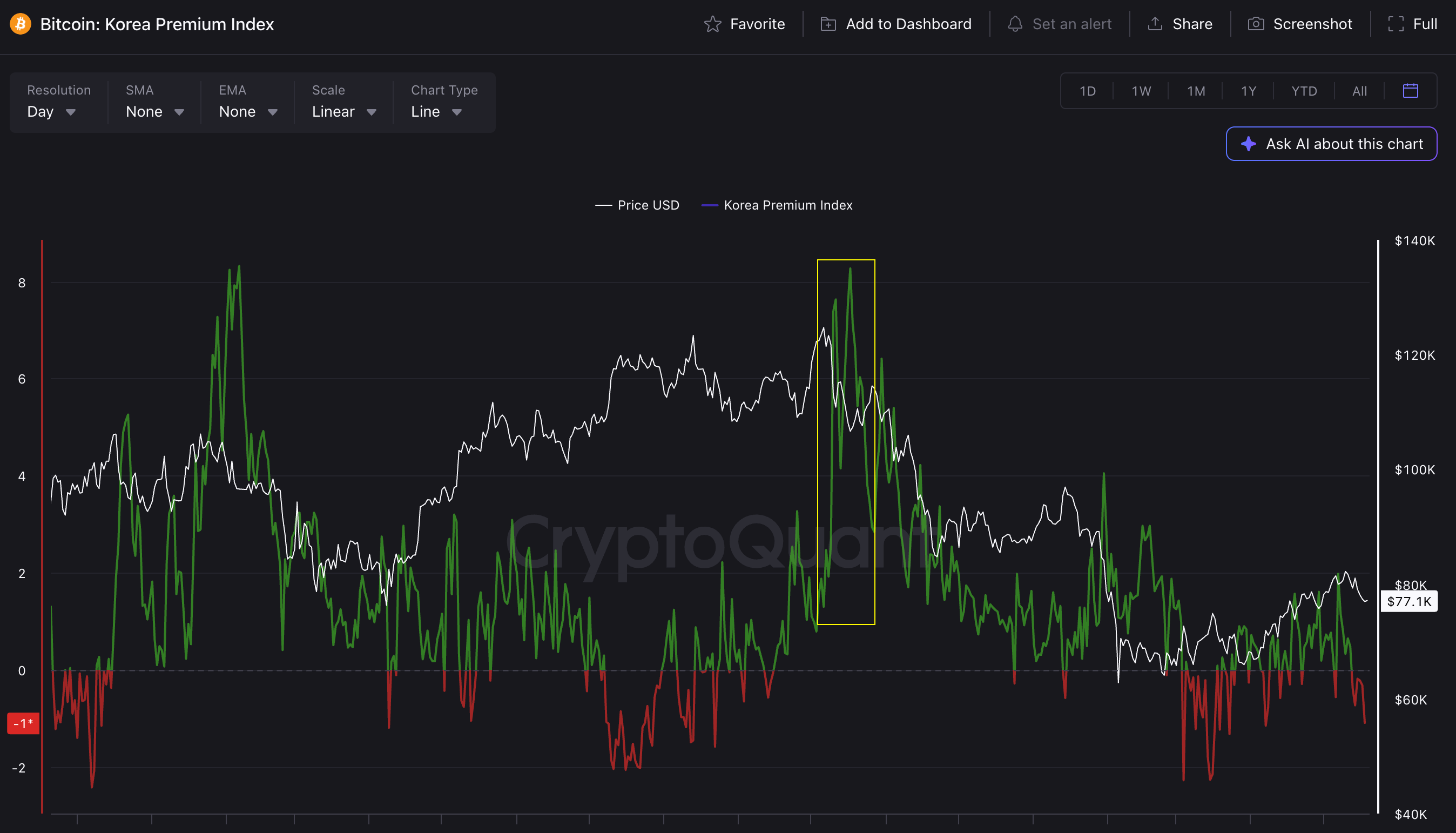
The demand for crypto among South Korean retail players is declining as social buzz attracts capital into its domestic market. CryptoQuant’s Bitcoin Korea Premium Index reached a high of 8.27 on October 14, roughly a week after BTC price hit a record high of $126,272 on October 6, reflecting a lag in retail participation.
Retail demand started to decline as Bitcoin headed toward $60,000 and flipped negative during price consolidation below $70,000 in March, signaling a retail shift from Bitcoin to possibly AI stocks or other speculative assets.
As of Tuesday, CryptoQuant’s Korea Premium Index stands at -1, suggesting a negative price gap between South Korean exchanges and other exchanges, which indicates a rise in selling pressure.
Will South Korean retail return to Bitcoin?
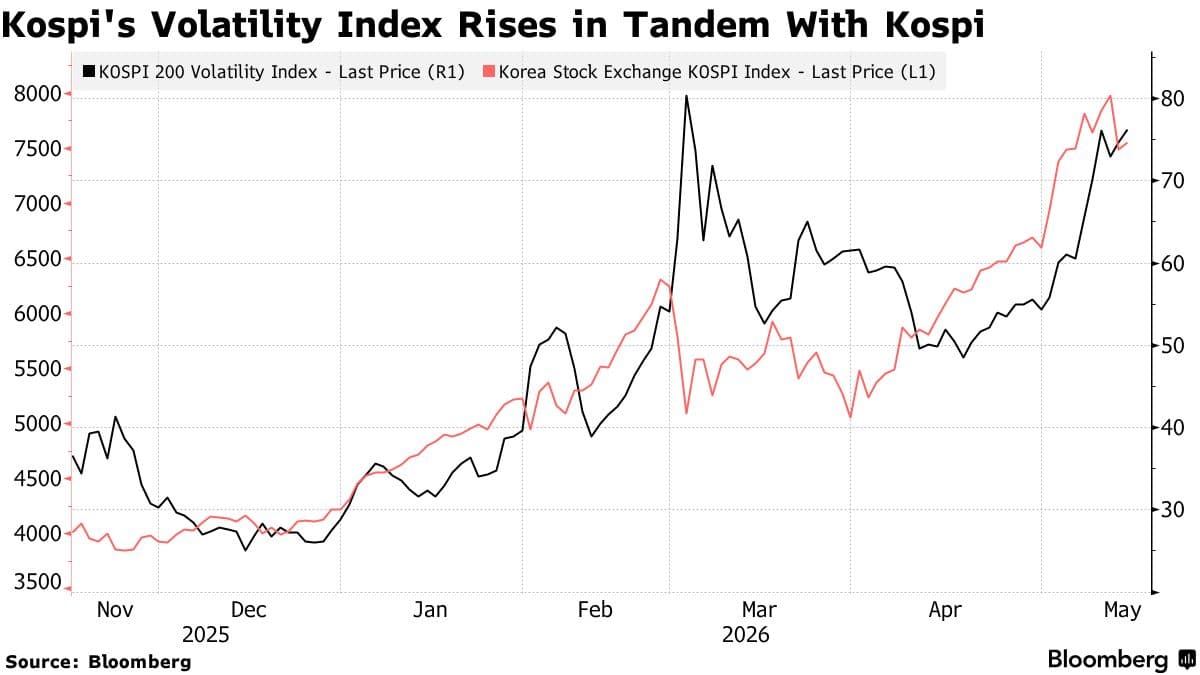
The ongoing rally in KOSPI is mainly driven by its top performers, including Samsung and SK Hynix, and the index's record highs are in tandem with its volatility index, KOSPI 200, which has crossed above 75, underscoring leverage and margin trading. This overexposure to risk, driven by rising speculation, raises concerns of a meltdown that could trigger the next wave of capital rotation. However, the shift to Bitcoin remains uncertain, but could be confirmed by a rise in Korea’s Premium Index above zero.
Nothing in this material constitutes investment advice, personal recommendation, investment research, an offer, or a solicitation to buy or sell any financial instrument. The content has been prepared without consideration of your individual investment objectives, financial situation, or needs, and should not be treated as such.
Past performance is not a reliable indicator of future performance and/or results. Forward-looking scenarios or forecasts are not a guarantee of future performance. Actual results may differ materially from those anticipated.
Mitrade makes no representation or warranty as to the accuracy or completeness of the information provided and accepts no liability for any loss arising from reliance on such information.
Recommended Articles


