



International Business Machines Corp Stock (IBM) Closed Down by 3.19% on Jun 17: What Investors Need To Know
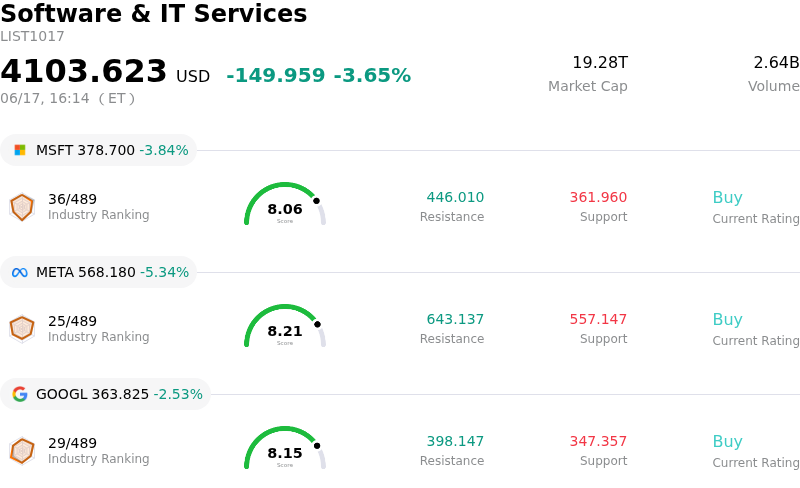
International Business Machines Corp (IBM) closed down by 3.19%. The Software & IT Services sector is down by 3.65%. The company outperformed the industry. Top 3 stocks by turnover in the sector: Microsoft Corp (MSFT) down 3.93%; Meta Platforms Inc (META) down 5.34%; Alphabet Inc Class A (GOOGL) down 2.53%.
What is driving International Business Machines Corp (IBM)’s stock price down today?
The downward movement and heightened intraday volatility in International Business Machines (IBM) shares are primarily driven by a hawkish shift in macroeconomic policy, coupled with broader technology sector multiple compression and post-rally profit-taking.
The most significant catalyst of the day was the Federal Reserve's monetary policy decision, the first presided over by the new Chairman, Kevin Warsh. While the central bank held interest rates steady as expected, the accompanying Summary of Economic Projections delivered a distinctly hawkish surprise. The updated dot plot showed that a significant portion of policymakers now anticipate an interest rate hike by the end of the year, driven by persistent inflation concerns. Additionally, the Fed removed forward guidance from its policy statement, indicating a transition toward a pure, data-dependent regime. This unexpected hawkish posture triggered a swift reversal across major stock indexes, pushing Treasury yields higher and sparking widespread selling in tech equities, which are highly sensitive to rising borrowing costs.
For IBM, this macro environment exacerbates a period of consolidation following its aggressive rally earlier in the month. The stock had previously surged to record highs, fueled by high-profile partnership announcements with Nvidia regarding its new AI accelerators and bullish analyst initiations. However, higher-for-longer interest rates and quantitative tightening measures threaten to compress valuation multiples across enterprise tech. Investors are increasingly reassessing whether the near-term earnings durability of legacy tech firms can support these expanded multiples, leading to a wave of defensive positioning and profit-taking.
On the business front, IBM released a comprehensive global study focusing on AI sovereignty and enterprise resilience. The report highlighted that global executives are facing steep challenges regarding AI vendor lock-in, geographic data residency rules, and operational dependencies, with a vast majority admitting difficulty in switching providers. While this underscores IBM's crucial advisory role in navigating hybrid cloud complexity, it also highlights the friction and rising operational costs that enterprise clients face in implementing artificial intelligence. Amid tightening credit conditions and a softer outlook for corporate discretionary spend in IT consulting, these headwinds have made investors more cautious.
In summary, the confluence of the Federal Reserve's hawkish policy shift, a rise in Treasury yields, and technical profit-taking after a historic run-up has intensified the selling pressure on IBM. The stock's heightened intraday volatility reflects a broader market transition, where investors are actively recalibrating valuations against a more restrictive monetary backdrop.
Technical Analysis of International Business Machines Corp (IBM)
Technically, International Business Machines Corp (IBM) shows a MACD (12,26,9) value of -6.529, indicating a neutral signal. The RSI at 52.232 suggests neutral condition and the Williams %R at 81.699 suggests oversold condition. Please monitor closely.
Media Coverage of International Business Machines Corp (IBM)
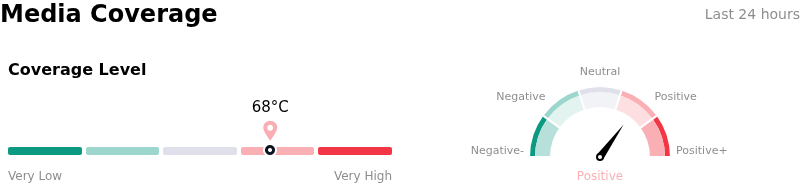
In terms of media coverage, International Business Machines Corp (IBM) shows a coverage score of 68, indicating a high level of media attention. The overall market sentiment index is currently in bullish zone.
Fundamental Analysis of International Business Machines Corp (IBM)
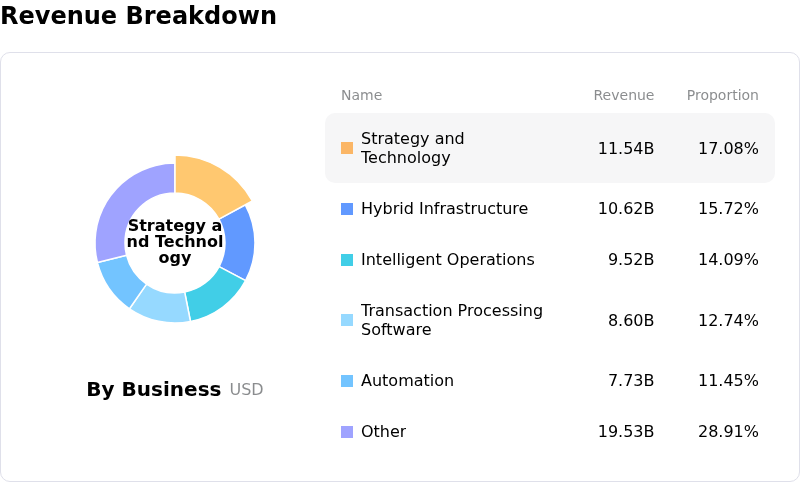
International Business Machines Corp (IBM) is in the Software & IT Services industry. Its latest annual revenue is $67.53B, ranking 7 in the industry. The net profit is $10.59B, ranking 11 in the industry. Company Profile
Over the past month, multiple analysts have rated the company as Buy, with an average price target of $284.95, a high of $375.00, and a low of $195.00.
More details about International Business Machines Corp (IBM)
Company Specific Risks:
- Sluggish Consulting Growth and AI Disruption: IBM's massive Consulting division remains a major structural concern, having slowed to just 1% growth. Institutional analysts fear that the rapid rise of advanced AI coding tools—which automate legacy COBOL and software system modernization at a fraction of manual costs—will permanently cannibalize the addressable market and fee structures for IBM’s core professional IT services.
- Stretched Valuations and Momentum Reversal: After surging to a record high of $333 in early June, the stock suffered a sharp 16% correction down to the $268 level. This reversal underscores growing market skepticism about whether IBM's premium valuation multiple (trading above 22x forward earnings) is fundamentally sustainable, especially as management recently left full-year guidance unchanged despite a strong Q1 print.
- Heavy Capital Demands of the $10 Billion Quantum Bet: The company's massive strategic commitment to spend $10 billion over five years on quantum computing introduces intense near-term execution and margin risks. Because commercialization of fault-tolerant, scalable quantum systems is a long-term play targeted for 2029, these immense upfront R&D and foundry capital outlays will heavily pressure margins before contributing meaningful revenue.
- Enterprise AI Scaling Obstacles and Client "Control Gaps": A global study released by IBM on June 17, 2026, revealed that 91% of enterprise executives fail to understand their AI dependencies, with most feeling locked into rigid systems they cannot easily modify. Analysts warn that these mounting sovereignty, compliance, and integration bottlenecks will likely cause corporate clients to delay broad deployment cycles, directly slowing the monetization of IBM's hybrid cloud and watsonx platforms.
Nothing in this material constitutes investment advice, personal recommendation, investment research, an offer, or a solicitation to buy or sell any financial instrument. The content has been prepared without consideration of your individual investment objectives, financial situation, or needs, and should not be treated as such.
Past performance is not a reliable indicator of future performance and/or results. Forward-looking scenarios or forecasts are not a guarantee of future performance. Actual results may differ materially from those anticipated.
Mitrade makes no representation or warranty as to the accuracy or completeness of the information provided and accepts no liability for any loss arising from reliance on such information.
Recommended Articles


