



GBP/USD (GBPUSD) is down 0.54% on Jun 18: The Reason Has Emerged
GBP/USD (GBPUSD) is down 0.54% at Jun 18 07:05(ET), now at $1.3216, with a 7-day down of 1.48%.
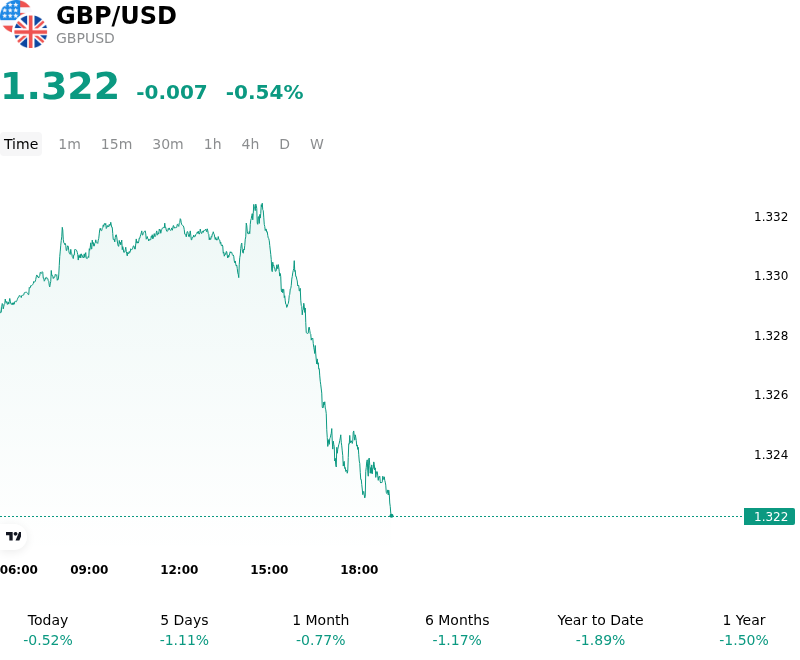
What is driving GBP/USD (GBPUSD)’s stock price down today?
The decline in the GBPUSD currency pair is primarily driven by a divergence in central bank policy trajectories following a major geopolitical de-escalation and hawkish signals from the Federal Reserve.
First, the US Dollar found substantial support in the wake of the Federal Reserve’s interest-rate decision, the first led by new Chair Kevin Warsh. While the central bank kept its benchmark policy rate steady, the updated Summary of Economic Projections delivered a notably hawkish message. Half of the policymaking committee now expects at least one rate hike before the end of the year, raising the median projected rate. Additionally, the Fed’s removal of its easing bias and shift away from explicit forward guidance suggested a more aggressive posture toward maintaining price stability. This hawkish shift triggered a rise in US Treasury yields, strengthening the greenback against its major peers.
Simultaneously, the geopolitical landscape experienced a significant shift with the remote signing of a memorandum of understanding between the United States and Iran. Aimed at permanently ending hostilities and reopening the Strait of Hormuz, the peace agreement immediately eased global energy supply concerns. This led to a sharp drop in Brent crude prices to below seventy-five dollars a barrel, significantly dragging down global inflation expectations and reducing the urgency for other central banks to hike rates defensively.
This geopolitical breakthrough directly impacted the British Pound by altering expectations for the Bank of England's monetary policy. At its meeting, the Monetary Policy Committee voted seven to two to hold its base rate steady at 3.75%. Although two policymakers dissented in favor of a rate hike, the overall pressure on the central bank to tighten policy has dissipated. Just prior to the meeting, the UK Consumer Price Index for May printed at an annual rate of 2.8%, undershooting the consensus forecast of an acceleration, while core inflation cooled.
With domestic price pressures easing and energy-driven inflation risks receding alongside falling oil prices, investors rapidly unwound previous expectations of additional rate hikes from the Bank of England. The combination of a newly hawkish Federal Reserve raising the prospect of higher US interest rates and a Bank of England whose tightening cycle has been effectively capped by cooling inflation drove the interest-rate and yield differentials in favor of the US Dollar, dragging the currency pair lower.
Technical Analysis of GBP/USD (GBPUSD)
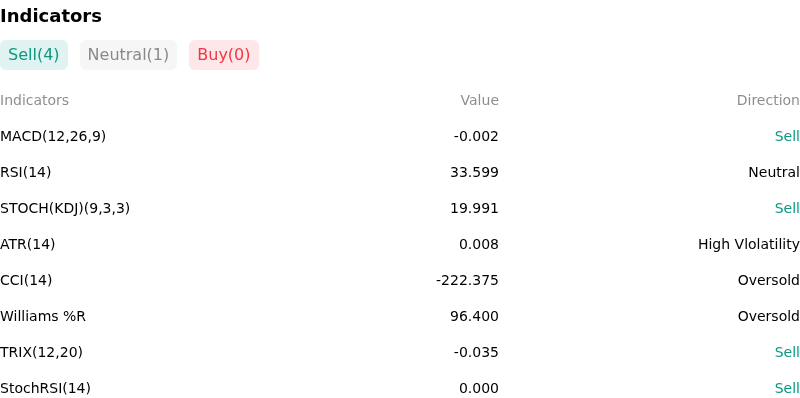
Technically, GBP/USD (GBPUSD) shows a MACD (12,26,9) value of -0.002, indicating a sell signal. The RSI at 33.599 suggests neutral condition and the Williams %R at 96.400 suggests oversold condition. Please monitor closely.
More details about GBP/USD (GBPUSD)
Recent Events and Risks:
- **Hawkish Federal Reserve Pivot Under New Chairmanship**: On June 17, 2026, the FOMC held rates steady at 3.50%–3.75% but delivered a highly hawkish dot plot update under new Chair Kevin Warsh, with nine officials forecasting rate hikes before the end of 2026 and a median year-end projection rising to 3.8%. This hawkish shift, combined with the elimination of forward easing guidance, triggered a massive dollar rally and sent GBPUSD tumbling past key dynamic support.
- **Downside UK Inflation Surprise**: UK CPI inflation for May unexpectedly held steady at 2.8% on June 17, 2026, missing the 3.0% market consensus. This cooling of core goods disinflation indicates a lack of pricing power among British firms and has significantly weakened the near-term domestic yield advantage for Sterling.
- **Dovish Pressures on Bank of England Rate Outlook**: Slowing UK economic activity—including a 0.1% GDP contraction in April—and private sector wage growth dropping to a six-year low of 2.9% have dramatically reduced expectations of a hawkish tilt or rate hike from the BoE. A dovish vote split or cautious policy statement during the June 18, 2026 meeting threatens to expose GBPUSD to further sell-offs.
- **Unwinding of Geopolitical Energy Risk Premium**: The signing of a preliminary US-Iran peace deal has eased fears of energy supply chain blockades, sending oil and gas prices to their lowest levels since early March. The resulting drop in projected imported energy inflation weakens the structural policy tightening argument for the BoE, removing a key pillar of support for the Pound.
Nothing in this material constitutes investment advice, personal recommendation, investment research, an offer, or a solicitation to buy or sell any financial instrument. The content has been prepared without consideration of your individual investment objectives, financial situation, or needs, and should not be treated as such.
Past performance is not a reliable indicator of future performance and/or results. Forward-looking scenarios or forecasts are not a guarantee of future performance. Actual results may differ materially from those anticipated.
Mitrade makes no representation or warranty as to the accuracy or completeness of the information provided and accepts no liability for any loss arising from reliance on such information.
Recommended Articles


