



US July PPI Below Expectations as Producer Inflation Cools Significantly, Easing Fed Rate Hike Pressure
TradingKey - Data released by the U.S. Bureau of Labor Statistics on Thursday showed that the U.S. Producer Price Index (PPI) for July was flat month-over-month, lower than market expectations of a 0.2% increase; year-over-year, it rose 4.7%, pulling back significantly from 5.5% in June and coming in below market expectations of 4.9%, indicating that production-side inflationary pressures in the U.S. are cooling down.
Core PPI, which excludes food and energy, rose 0.2% month-over-month, below market expectations of 0.3%; year-over-year, it rose 4.2%, declining further from the previous reading of 4.7%. The U.S. July CPI released a day earlier also slowed from 3.5% to 3.4% year-over-year, with two consecutive inflation reports both showing a moderation in price pressures.
Looking at specific components, final demand goods prices fell 0.7% in July, with energy prices dropping 3.1% and food prices declining 0.9%; gasoline prices fell 5.7%, becoming a major factor behind the pullback in goods prices. Meanwhile, final demand services prices rose 0.2% and construction prices rose 2.2%, partially offsetting the decline in goods prices.
Following the data release, gold rallied on the positive news, with prices quickly advancing toward the $4,400 mark. The lower-than-expected PPI further relieved market concerns about a reacceleration of U.S. inflation and reduced pressure on the Federal Reserve to continue raising interest rates in the short term.
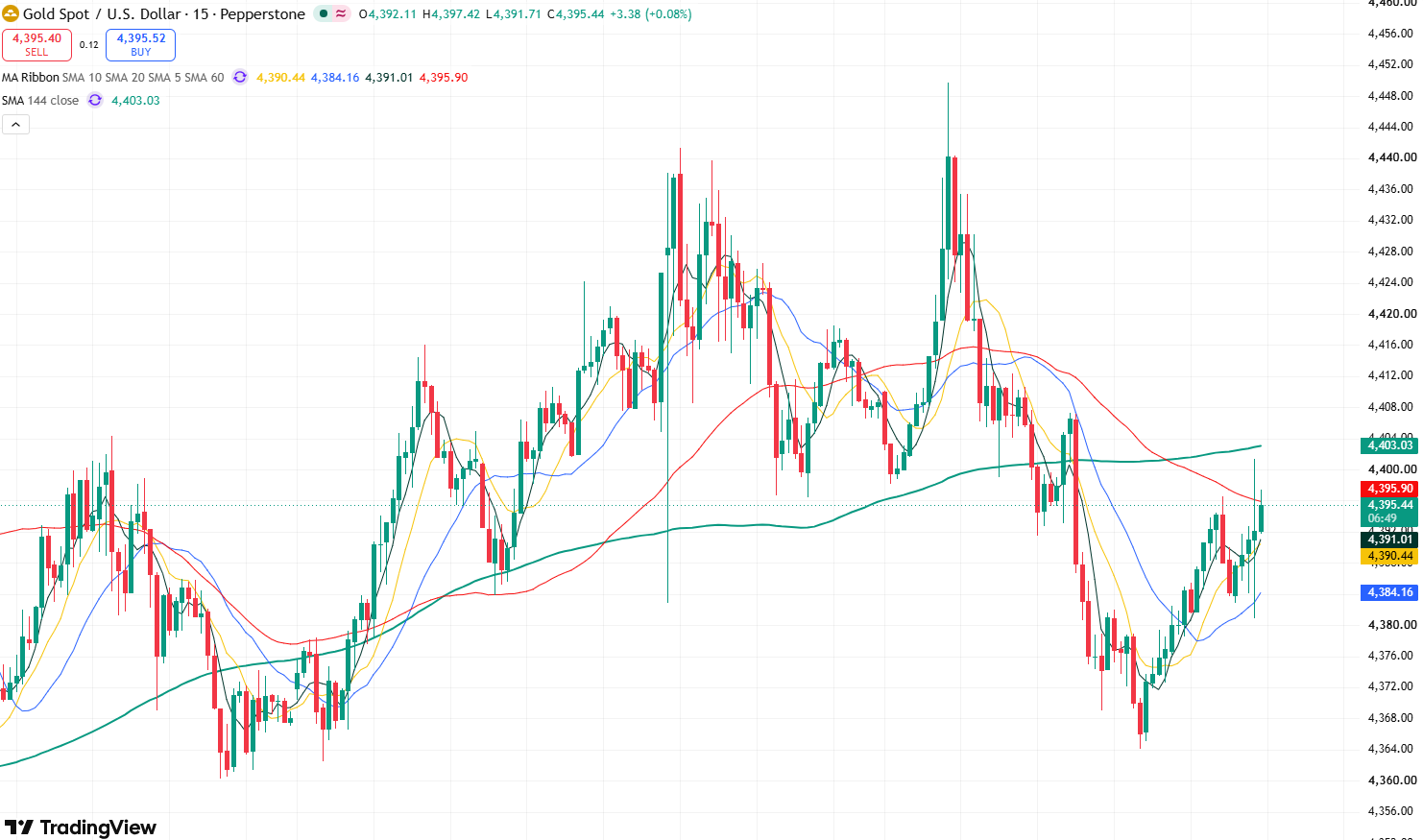
Gold Price 15-Minute Chart, Source: TradingView
For the market, the July PPI together with the previous CPI sent signals of cooling inflation. Against the backdrop of a noticeable recent slowdown in the U.S. labor market, declining inflationary pressure means the Federal Reserve has greater policy leeway between economic growth and prices. Moving forward, investors will continue to monitor statements from Fed officials and subsequent PCE inflation data to gauge the policy direction for the September rate-setting meeting.
Nothing in this material constitutes investment advice, personal recommendation, investment research, an offer, or a solicitation to buy or sell any financial instrument. The content has been prepared without consideration of your individual investment objectives, financial situation, or needs, and should not be treated as such.
Past performance is not a reliable indicator of future performance and/or results. Forward-looking scenarios or forecasts are not a guarantee of future performance. Actual results may differ materially from those anticipated.
Mitrade makes no representation or warranty as to the accuracy or completeness of the information provided and accepts no liability for any loss arising from reliance on such information.
Recommended Articles


