


Sanofi to Acquire Insmed for $41 Billion in Biggest Pharma Deal in Nearly Three Years
TradingKey - On November 24 ET, Sanofi (SNY) saw its U.S. ADRs surge over 9% in early trading to $51.12. On the same day, the company announced an agreement to acquire U.S. biopharmaceutical company Insmed (INSM) for $175 per share in cash, valuing the transaction at an equity value of approximately $41 billion, a premium of about 46% over the closing price on November 18 before buyout reports emerged. If successfully completed, this will be the largest M&A deal in the global pharmaceutical industry since Pfizer acquired Seagen for approximately $43 billion in December 2023.
A key reason the buyer is willing to pay this premium is time. Sanofi's best-selling drugs will lose patent protection one after another in the early 2030s, while Insmed already has two lung disease drugs that have begun contributing revenue.
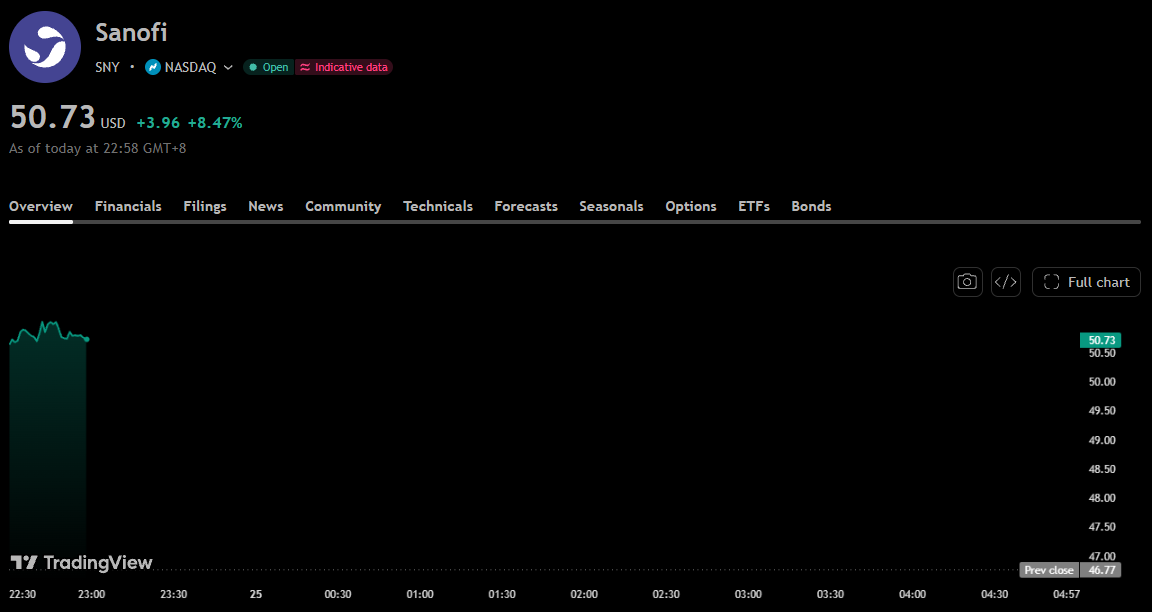
Sanofi stock price chart, Source: TradingView
Dupixent Contributes Over a Third of Revenue as Waiting for In-House Drugs Comes at a Cost
In 2025, Dupixent, which treats conditions such as asthma and eczema, generated approximately €15.7 billion in sales for Sanofi, accounting for about 36% of its €43.6 billion in full-year revenue. Once patent protection expires, competition from biosimilars could weigh on both selling prices and market share. Even if Sanofi can launch a new drug by then, it will still take years from regulatory approval to gradual adoption by physicians, and until sales are sufficient to fill the gap.
Continuing to wait on internal R&D also comes at a cost. Last year, trial results for a drug candidate expected to succeed Dupixent fell short of expectations, wiping out nearly $13 billion from Sanofi's market capitalization in a single day. For the company, a clinical setback also means less time left for the next product. This explains why new Chief Executive Officer Belén Garijo values drugs with an established sales track record: once the transaction closes, Insmed's products can contribute revenue, allowing Sanofi to scale up sales of the new products ahead of time while Dupixent is still growing.
What $41 Billion Bought Is the Commercialization Path Already Traveled by Two Drugs
Among them, Brinsupri best exemplifies the value of time. This drug for treating non-cystic fibrosis bronchiectasis was launched in the U.S. in August 2025 and had generated cumulative revenue of $1.09 billion as of the end of September 2026. Arikayce, another inhaled medication for treating certain chronic lung infections, posted 2025 sales of $434 million, up 19% year-over-year. Once Sanofi takes over, it can directly leverage its existing sales network to reach more patients, eliminating the wait from early-stage R&D and regulatory approval to initial market entry.
The two marketed drugs can also buy time for subsequent pipeline development. Insmed's inhaled therapy TPIP has entered Phase 3 clinical trials and, if clinical studies and regulatory approvals proceed smoothly, is expected to generate revenue after 2030. Until then, Brinsupri and Arikayce can shoulder part of the growth responsibilities. Jefferies analyst Michael Leuchten therefore believes the deal could extend Sanofi's earnings growth into the 2030s, giving the company time to replenish its pipeline. Management projects that combined peak annual sales for the acquired portfolio could exceed $10 billion, though achieving this level will still hinge on the continued sales ramp-up of the commercialized drugs and progress in the pipeline.
Whether this $41 billion is well spent will first be judged by Brinsupri's quarterly sales. If strong initial launch demand persists, Sanofi will have a business that can scale up before Dupixent's patent expires. The second milestone is the end of 2028: the company expects the acquisition to be accretive to business EPS by then, and financial reports will show whether the incremental profits can cover financing costs. Further down the road, it will depend on whether cash generated by these drugs can help the company pay down acquisition debt. These three milestones address the questions shareholders care about most: has the time bought translated into sales, profits, and cash?
Nothing in this material constitutes investment advice, personal recommendation, investment research, an offer, or a solicitation to buy or sell any financial instrument. The content has been prepared without consideration of your individual investment objectives, financial situation, or needs, and should not be treated as such.
Past performance is not a reliable indicator of future performance and/or results. Forward-looking scenarios or forecasts are not a guarantee of future performance. Actual results may differ materially from those anticipated.
Mitrade makes no representation or warranty as to the accuracy or completeness of the information provided and accepts no liability for any loss arising from reliance on such information.
Recommended Articles


