



Nvidia Fails to Extend Rally After 31.5% Surge as Nasdaq Retreats in Tandem, Goldman Says Monday Surge Driven by Short Covering
TradingKey - On November 24, Eastern Time, AI stocks that led U.S. equities the previous day were the first to pull back. Nvidia (NVDA) fell more than 8% intraday, dragging the Nasdaq Composite Index down as much as 2.6% and giving back part of the previous day's 6.5% gain. Amid sharp swings over the two days, the market remains divided on whether this rebound can be sustained.
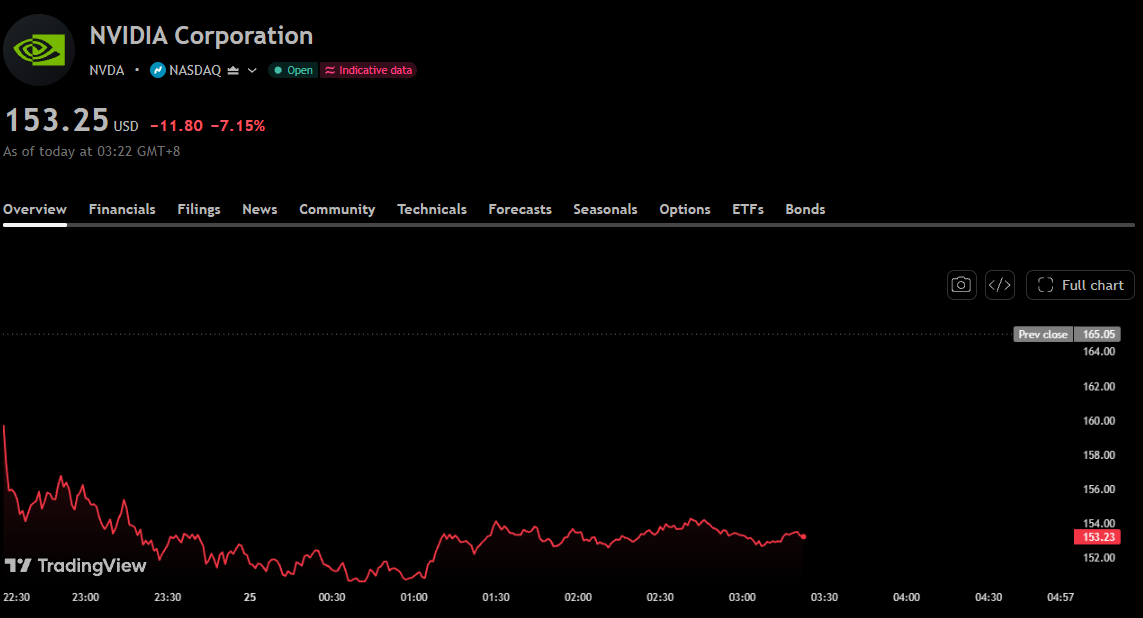
Nvidia stock price chart, Source: TradingView
Nvidia Surges 31.5% in Single Day as Short Covering Amplifies Nasdaq Gains
Monday's buying extended from chips to computing power leasing. Nvidia closed up 31.5%, posting its largest single-day gain in over two decades, while CoreWeave (CRWV), which purchases Nvidia chips and leases computing power, rose about 22%. The tech-heavy Nasdaq 100 Index gained about 7%, and the S&P 500 Index rose 4.7%, snapping a seven-day losing streak. Notably, U.S. stock futures had already climbed before Nvidia announced the return of Jensen Huang. Following consecutive sell-offs, the market was already showing signs of a rebound, and Huang's return further alleviated investor concerns over Nvidia's leadership and the AI supply chain.
Rich Privorotsky, head of Goldman Sachs' trading desk, believes that such sharp price swings are themselves a hallmark of a bear market rather than a signal of a restarted bull market. Short covering amplified the rally, as traders who bet last week on further stock declines needed to buy back shares to contain losses following the news. The faster prices rose, the greater the pressure on other short sellers to cover their positions. While such buy orders can push indexes higher in a single day, sustaining the rally once positions are closed will require new investors willing to take over at higher levels.
Supporting evidence he noted was that the improvement in the corporate credit market on Monday lagged significantly behind equities, while long-end U.S. Treasury yields were virtually unchanged. In his view, if the market can first stabilize for a few trading sessions to allow volatility-targeting funds to gradually increase positions, the rebound will have a better chance of securing sustained buying.
2018 Reference: What Signals to Watch After Tech Stock Rebound?
Drawing the 2018 comparison is Frank Flight, head of macro strategy at Citadel Securities. He noted that in the fall of 2018, U.S. economic data still showed resilience, but cyclical stocks had already begun to underperform defensive stocks, the dollar was strengthening, and the Treasury yield curve was flattening. Only then did pressure spread to tech stocks and the Nasdaq, ultimately dragging the S&P 500 into a sharp year-end correction. A similar sequence has emerged this year.
There is also a key difference between the two market episodes. In late 2018, Treasury yields fell significantly as markets began anticipating that the Federal Reserve would slow its policy tightening; during the current rebound, long-term interest rates remain elevated, and tech valuations have not yet received the same rate support. Going forward, far more telling than Nvidia's performance on any given day is whether cyclicals can halt their relative decline and whether corporate credit spreads can narrow as equities stabilize. Only if both improve in tandem will there be evidence that buying has broadened from short covering to a wider resurgence in risk appetite.
Nothing in this material constitutes investment advice, personal recommendation, investment research, an offer, or a solicitation to buy or sell any financial instrument. The content has been prepared without consideration of your individual investment objectives, financial situation, or needs, and should not be treated as such.
Past performance is not a reliable indicator of future performance and/or results. Forward-looking scenarios or forecasts are not a guarantee of future performance. Actual results may differ materially from those anticipated.
Mitrade makes no representation or warranty as to the accuracy or completeness of the information provided and accepts no liability for any loss arising from reliance on such information.
Recommended Articles


