



Japan and South Korea Stocks Open Lower and Plunge 3%, Memory Giants Samsung, SK Hynix, and Kioxia Collectively Tumble
TradingKey - Japanese and South Korean stock markets opened lower and continued to fall, with the KOSPI and Nikkei 225 indices dropping by about 3%, while Kioxia, SK Hynix, and Samsung Electronics plummeted in tandem.
During the Asian trading session on June 26, Japanese and South Korean stock markets opened lower and slid further. Specifically, South Korea's KOSPI index fell over 2.97%, dropping 265 points to temporarily stand at 8,664.71 points; the Nikkei 225 retreated 2.94%, falling more than 2,000 points to temporarily trade at 70,240.09 points.
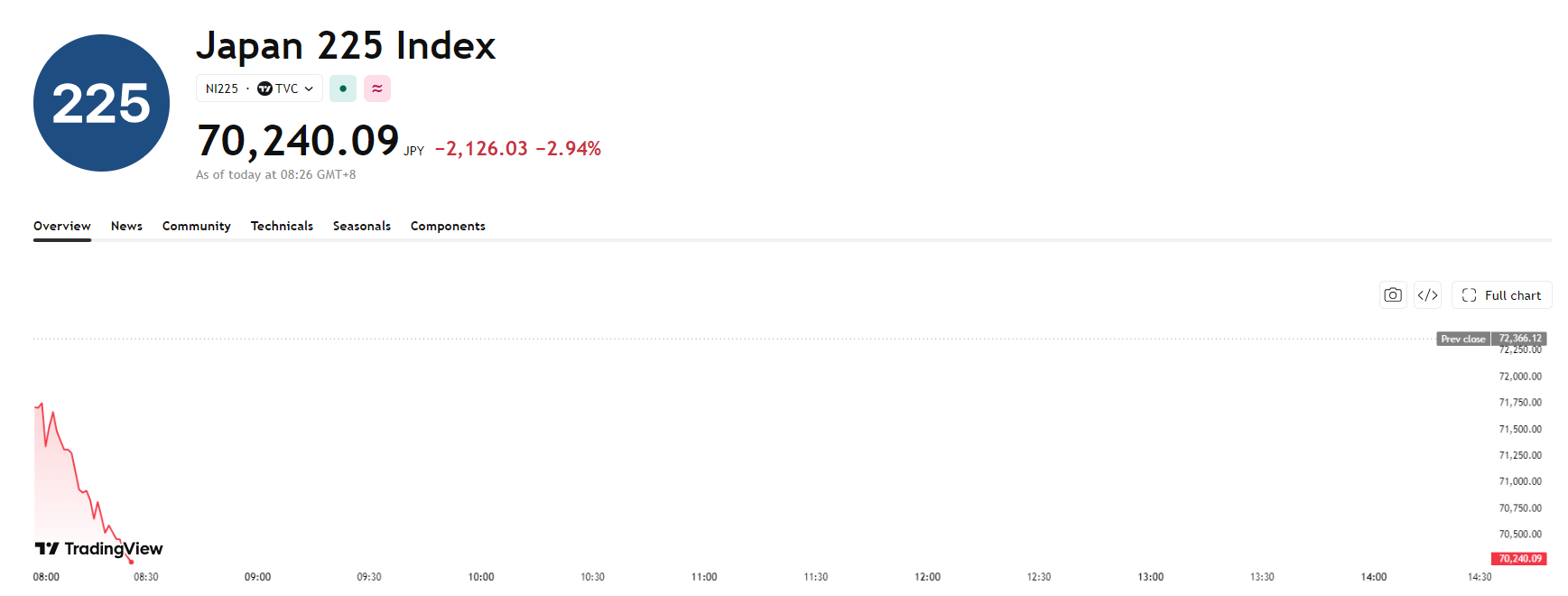 Nikkei 225 Index Chart, Source: TradingView
In terms of individual stocks, Kioxia fell 3.13%, retreating to around 100,000 yen, temporarily trading at 100,650 yen; SK Hynix fell 1.58%, slipping below the 2.9 million won threshold, temporarily trading at 2,871,000 won; Samsung Electronics fell 1.53%, temporarily trading at 353,000 won.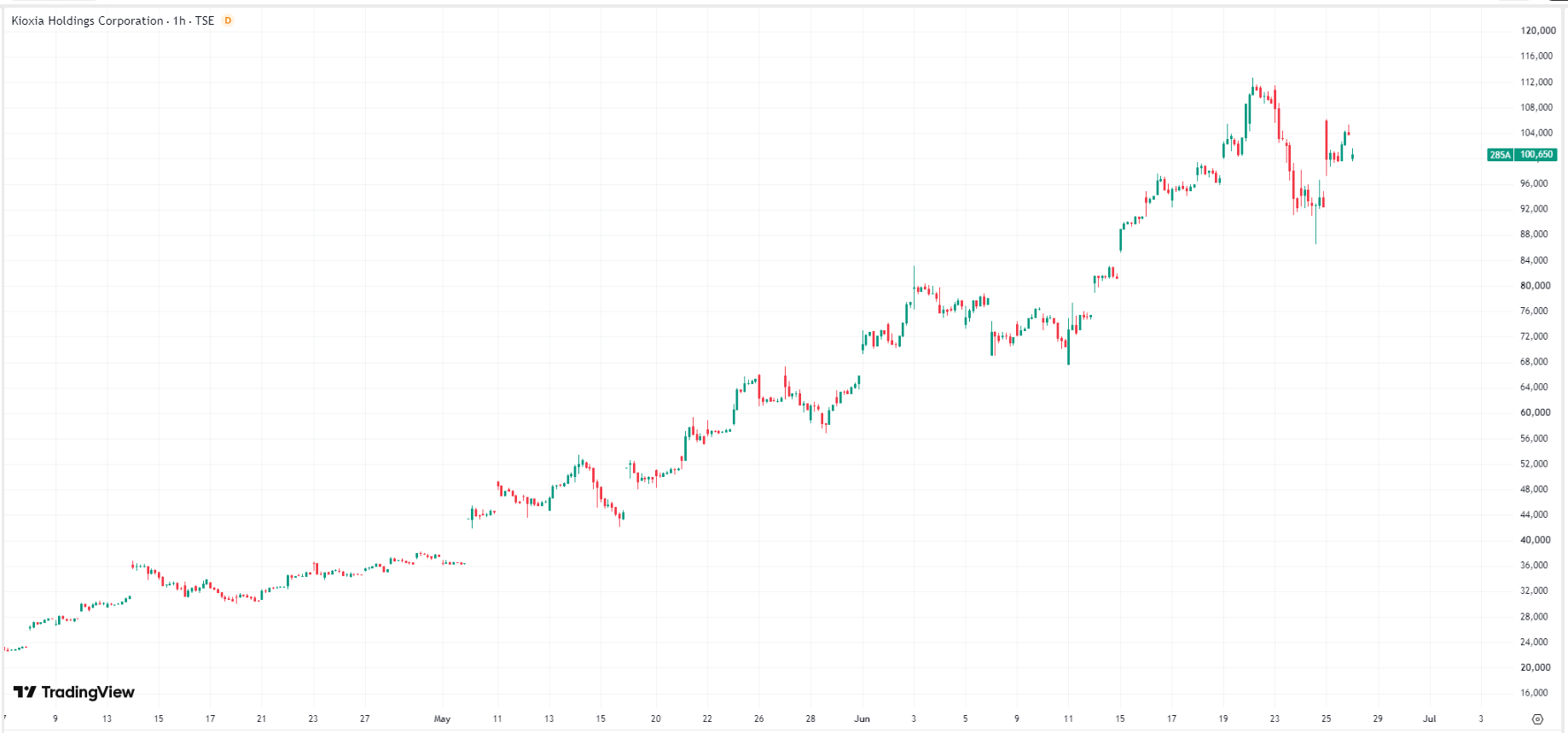
Kioxia Price Chart, Source: TradingView
Although Micron Technology ( MU )'s strong earnings report briefly stimulated Asian semiconductor stocks, the U.S. May PCE rose 4.1% year-over-year, hitting a near three-year high and boosting expectations for Federal Reserve rate hikes this year. Overnight, the overall trend of U.S. stocks was not optimistic, with tech giants generally pulling back, as heavyweight stocks like Microsoft ( MSFT ), Apple ( AAPL) and other heavyweight stocks collectively moved lower, dragging down the Nasdaq Index to a lower close.
In addition, although recent reports indicated that the U.S. and Iran were expected to reach an agreement and reopen the Strait of Hormuz, prompting oil prices to retreat, the latest geopolitical details show that the core conflicts between the two sides have not been fully resolved. For instance, Iran stated that 'there is still no safety guarantee for vessels veering off designated routes.' Such geopolitical uncertainty has once again raised alarms for the Japanese and South Korean markets, which are highly dependent on energy imports, thereby dampening market risk appetite.
Nothing in this material constitutes investment advice, personal recommendation, investment research, an offer, or a solicitation to buy or sell any financial instrument. The content has been prepared without consideration of your individual investment objectives, financial situation, or needs, and should not be treated as such.
Past performance is not a reliable indicator of future performance and/or results. Forward-looking scenarios or forecasts are not a guarantee of future performance. Actual results may differ materially from those anticipated.
Mitrade makes no representation or warranty as to the accuracy or completeness of the information provided and accepts no liability for any loss arising from reliance on such information.
Recommended Articles


