



TradingKey Daily Market Briefing: PCE Inflation Hits Three-Year High, Micron Leads Chip Stocks, Apple Falls Over 6%
Tracking Market Trends
TradingKey - On June 25, Eastern Time, the three major U.S. stock indices closed mixed. Robust earnings from Micron ( MU) reignited AI memory and semiconductor trading, but Apple ( AAPL) and several large-cap tech stocks fell, offsetting the support from the chip stock rebound. Meanwhile, U.S. PCE inflation for May rose to a three-year high, keeping the market cautious about the Federal Reserve's subsequent rate hike path.
At the close, the Dow Jones Industrial Average rose 0.14% to 51,926.20 points; the Nasdaq Composite Index fell 0.46% to 25,358.60 points; and the S&P 500 Index edged down 0.01% to 7,357.49 points.
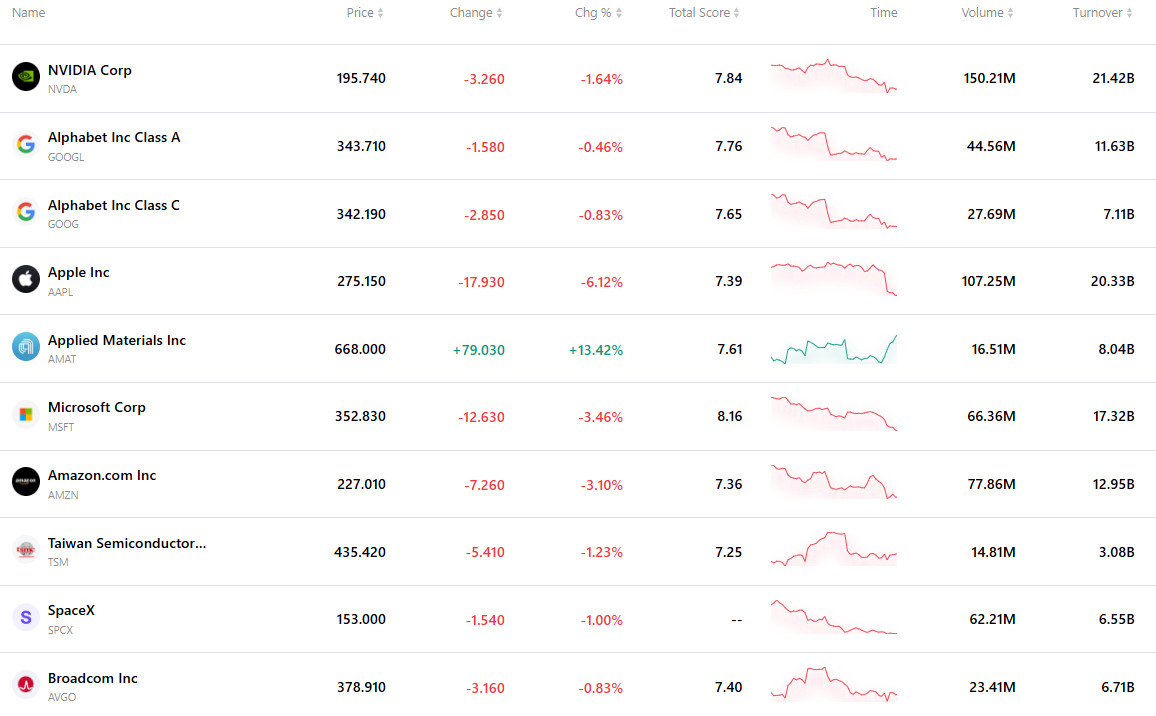
In terms of sectors and individual stocks, semiconductors became the strongest theme in the market. Micron Technology surged 15.74% as both its financial results and guidance were significantly better than expected, signaling that AI memory demand will remain tight. SanDisk ( SNDK) and Western Digital ( WDC) among other memory supply chain stocks rose in tandem, with the Philadelphia Semiconductor Index closing up 3.59%. However, large-cap tech stocks performed weakly, with Apple falling over 6%, while Nvidia ( NVDA ), Microsoft ( MSFT) and Alphabet ( GOOGL) were also under pressure, dragging the Nasdaq lower.
In commodity markets, oil prices rebounded. Affected by an attack on a cargo ship near Oman and rising shipping risks in the Strait of Hormuz, WTI ( USOIL) crude closed at $71.46, up 2.29%, while Brent crude rose to $75.08, up 2.23%. In precious metals, the U.S. dollar and Treasury yields pulled back after the release of the PCE data, and gold ( XAUUSD) prices rebounded, with spot gold rising above $4,032. In cryptocurrencies, Bitcoin briefly fell below the psychological $60,000 level, with overall market sentiment leaning bearish.
Market Headlines
U.S. PCE inflation rose to 4.1% in May, hitting its highest level since 2023. Core PCE rose to 3.4% year-over-year. Although inflation remains significantly above the Federal Reserve's 2% target, the monthly data was largely in line with expectations, causing the dollar and U.S. Treasury yields to retreat and easing market concerns over near-term interest rate hikes. However, sticky inflation still means it will be difficult for the Fed to pivot quickly toward easing.
U.S. core capital goods orders rose 1.6% month-over-month in May, significantly beating market expectations and indicating that corporate equipment investment remains resilient, particularly as AI infrastructure-related spending continues to support economic growth. However, overall durable goods orders declined 4.5%, dragged down primarily by volatile aircraft orders, which reflects a clear divergence remaining within the manufacturing sector.
Apple announced price hikes for multiple Mac and iPad products, citing rising costs due to a global memory chip shortage. The news sparked market concerns over consumer electronics demand and profit margins, causing Apple's stock price to plunge and dragging down the performance of mega-cap tech stocks. Micron's surge stood in stark contrast to Apple's decline, indicating that AI data centers are driving up upstream chip prices while squeezing downstream consumer electronics manufacturers.
The energy market has once again become a key variable in the inflation trade. Although prospects of a Middle East ceasefire once depressed oil prices, an attack on a cargo ship near Oman renewed market focus on shipping risks through the Strait of Hormuz. If oil prices continue to rebound, it could push inflation expectations higher again and limit the Federal Reserve's room for a policy pivot.
Top 10 most active stocks
The following table lists the ten most actively traded stocks in the market recently. Backed by massive trading volumes and excellent liquidity, these assets have become key benchmarks for tracking global market dynamics.
Nothing in this material constitutes investment advice, personal recommendation, investment research, an offer, or a solicitation to buy or sell any financial instrument. The content has been prepared without consideration of your individual investment objectives, financial situation, or needs, and should not be treated as such.
Past performance is not a reliable indicator of future performance and/or results. Forward-looking scenarios or forecasts are not a guarantee of future performance. Actual results may differ materially from those anticipated.
Mitrade makes no representation or warranty as to the accuracy or completeness of the information provided and accepts no liability for any loss arising from reliance on such information.
Recommended Articles


