



Kioxia Plunges 18% and SoftBank Drops Over 6% as Japan Semiconductor Sector Faces New Sell-Off
TradingKey - During the Asian trading session on July 28, Japanese stocks opened lower and accelerated their slide. As of press time, the Nikkei 225 Index fell over 4%, briefly dropping below 62,000 points to hit its lowest level since late May, while the Topix Index fell nearly 3%. The semiconductor sector collapsed almost across the board, becoming the primary drag on the broader market.
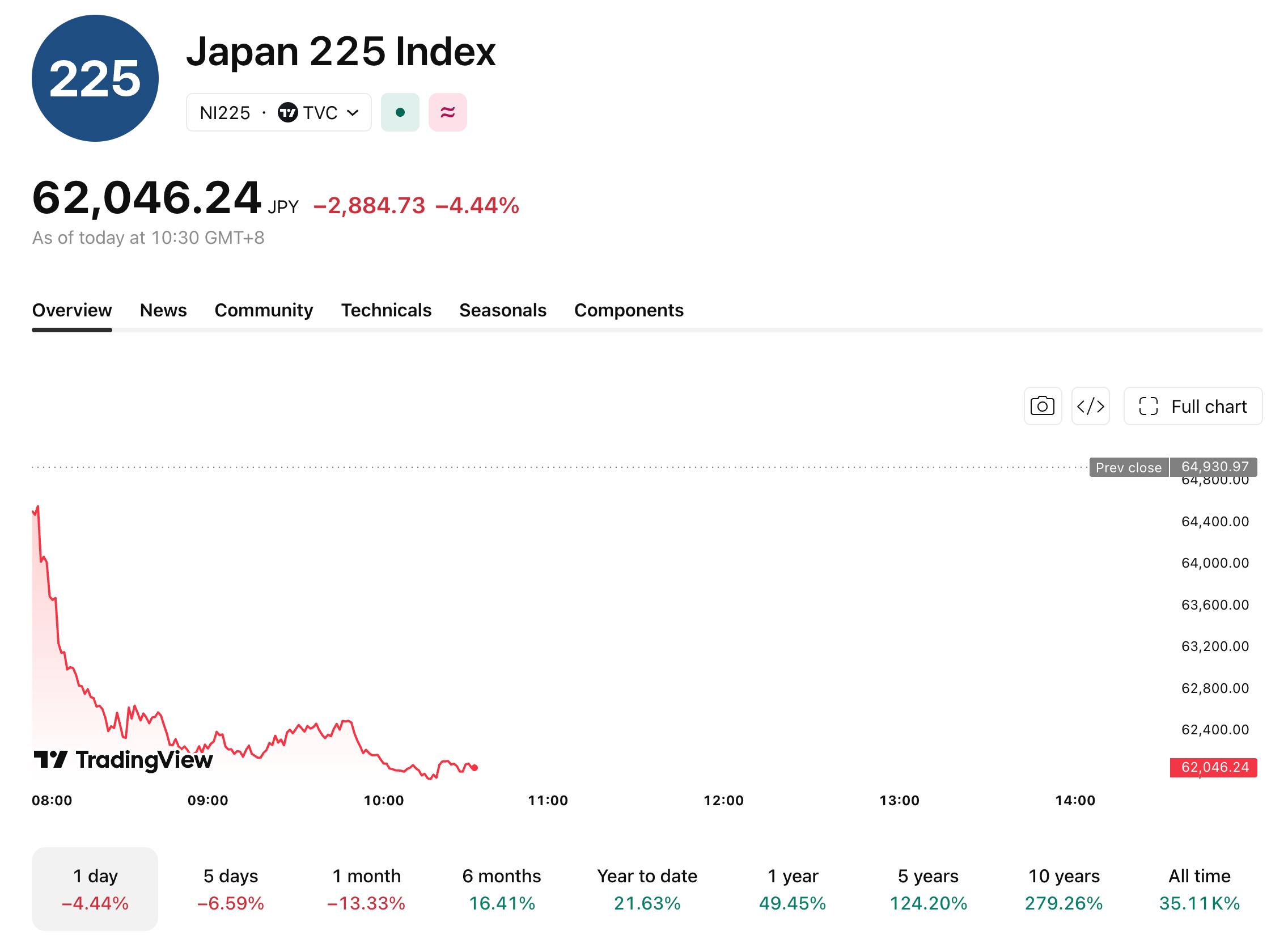
[Source: TradingView]
Among individual stocks, as of press time, memory chip giant Kioxia Holdings plunged over 18% intraday, marking its largest single-day drop since November last year and leading the Nikkei index lower. Advantest and Tokyo Electron both tumbled over 10%, while SoftBank Group also weakened, dropping more than 6%.
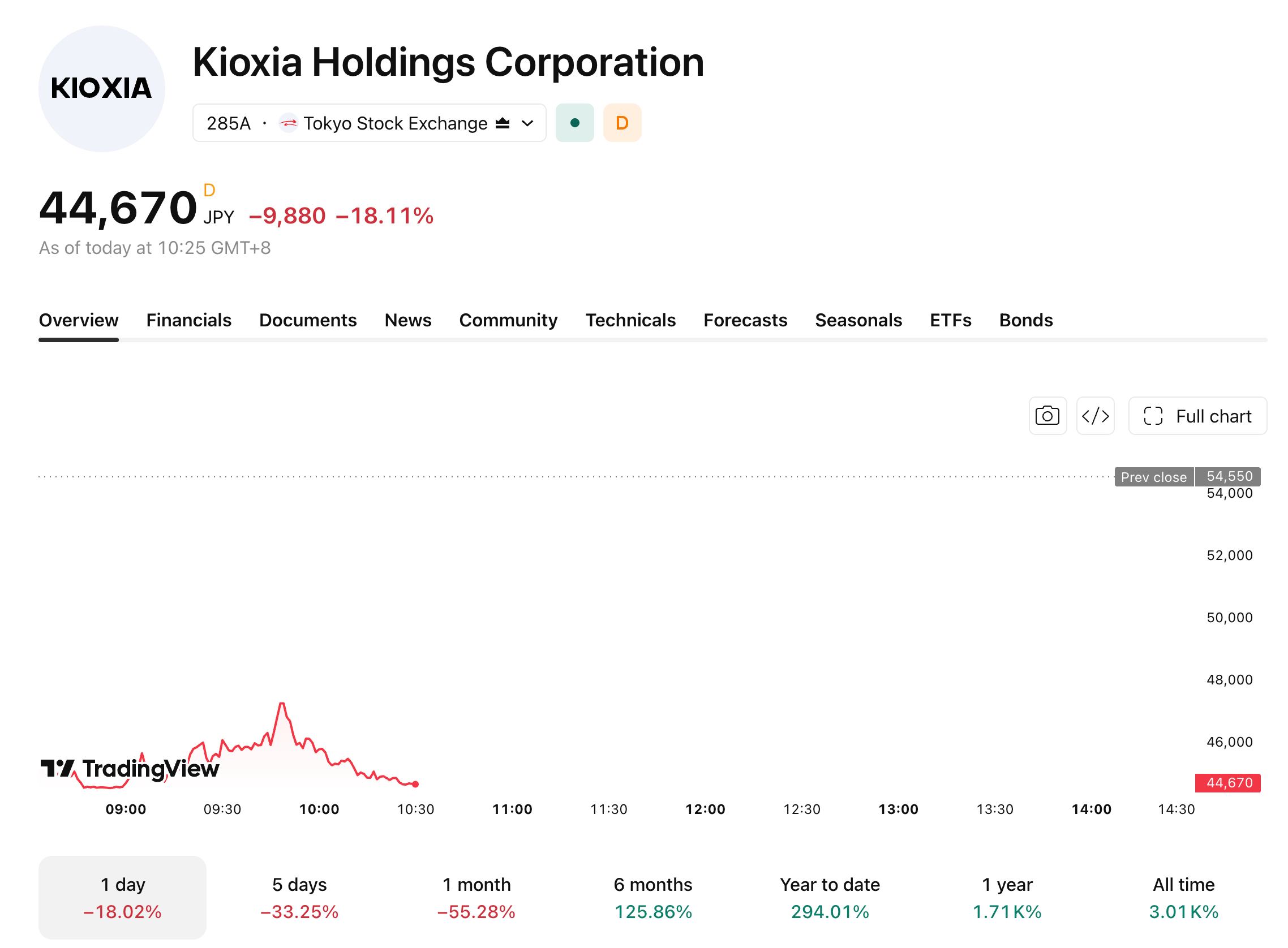
[Source: TradingView]
The selling pressure was primarily driven by a combination of multiple negative factors. On the news front, Nvidia ( NVDA) is in talks for AI infrastructure projects totaling over $750 billion and plans to provide approximately $250 billion in financing guarantees for OpenAI. The market is concerned about the potential credit risks associated with this 'circular financing' model, sending Nvidia's debt default insurance costs soaring, with the company closing down about 5% overnight.
Meanwhile, there are reports that Chinese state-owned enterprises have initiated the production of domestically developed immersion DUV lithography machines, with plans to deliver about 5 units this year, and SMIC, Hua Hong Semiconductor, and ChangXin Memory Technologies are on the list of first-batch customers. The chief strategist at Nomura Asset Management pointed out that China's progress in the field of semiconductor manufacturing equipment poses a substantial competitive threat to Japanese suppliers, which have long held a dominant position in the sector.
Overnight, the Philadelphia Semiconductor Index (SOX) closed down over 2%, hitting its lowest close since May 20. A sell-off triggered by anxiety over AI infrastructure investment is spreading from US stocks to the Japanese semiconductor sector.
Nothing in this material constitutes investment advice, personal recommendation, investment research, an offer, or a solicitation to buy or sell any financial instrument. The content has been prepared without consideration of your individual investment objectives, financial situation, or needs, and should not be treated as such.
Past performance is not a reliable indicator of future performance and/or results. Forward-looking scenarios or forecasts are not a guarantee of future performance. Actual results may differ materially from those anticipated.
Mitrade makes no representation or warranty as to the accuracy or completeness of the information provided and accepts no liability for any loss arising from reliance on such information.
Recommended Articles


